
Book 18 Of The Dragon Warriors - 3 Lens Review
Dear readers! Welcome to the Book Review of The Harmonya Chronicles, Book 18 Of The Dragon Warriors, Peace for All Kind. A Three-Lens Publisher/Editor/Audience Analysis. The 18th and final review in the series of reviews!
The Harmonya Team together with Shaheer J. Syed
9/7/20267 min read


Note: This review follows Book 17 Of The Dragon Warriors — The War for Peace Part 3: Darkstar, where the dawn that had been building across seventeen books arrived, and the question it opened became audible for the first time. Book 18 is the answer. It must be read at the end of everything that preceded it — and only then.
For complete context: Book 01 | Book 02 | Book 03 | Book 04 | Book 05 | Book 06 | Book 07 | Book 08 | Book 09 | Book 10 | Book 11 | Book 12 | Book 13 | Book 14 | Book 15 | Book 16 | Book 17 |
THE PUBLISHER'S LENS
Why Book 18 Is the Most Complete Artistic Achievement the Saga Has Produced
Book 18 — Of The Dragon Warriors: Peace for All Kind — is the final volume of Act 1 of The Harmonya Chronicles. That description is accurate. It is also insufficient.
What Book 18 is, in the most precise terms available: the answer that eighteen books of question were always building toward. Not the answer to whether the warriors win. Not the answer to whether the darkness is defeated. The answer to the question underneath all the questions — the one that has been present in the text since a five-year-old girl decided to change an unchangeable name and walked into a forest alone: what is this all for, at the root of everything?
That answer is cosmological in scale. It reaches to the origin of light and darkness themselves — to the first exchange, the first conflict, the first structure that was drawn in a fabric that did not yet have space in it. And it is, simultaneously, as small and specific and indestructible as a honey cake still warm from a kitchen in Kidonya.
This is Book 18 's architectural achievement: it holds both registers at once, without collapsing either into the other. The largest answer the saga has ever offered arrives alongside the smallest, most ordinary, most irreplaceable detail imaginable. And the two are not in tension. They are the same thing, seen from different distances.
For studios, Book 18 presents the rarest kind of finale material: a story that completes its philosophical argument at the same moment it completes its narrative one, in a scene whose emotional weight has been accumulating across seventeen volumes. The challenge of adapting it faithfully is immense. The gift it offers — if adapted with the honesty the material demands — is something that the screen rarely achieves.
THE EDITOR'S LENS
Narrative Architecture: Completion as Structure
Book 18 is built on a structural principle that distinguishes it from every preceding volume: it does not move toward. It arrives. And in arriving, it reveals.
The distinction matters. Seventeen books have been a story of movement — toward the fellowship, toward the confrontation, toward the dawn. Book 18 is a story of presence. Of what is discovered when the moving stops and the full truth of where the journey has led becomes visible. Not the victory. The reason for the victory. Not the design. The love inside the design.
What the book reveals — and this is all that can be said without taking from the reader what is theirs to discover — is the answer to the cosmological question the saga has been approaching since its first pages. Why Harmonya exists. Why the war existed. Why seven specific souls were built across cycles. And what they are asked to become at the end of all of it.
That last question is Book 18 's most extraordinary structural element. The warriors are not simply celebrated and released. They are asked something. And what they ask in return — before they answer — is the most precise emotional and philosophical statement this saga has ever made about what it means to be human in the face of something that exceeds humanity.
The Farewell That Is Not a Farewell.
Book 18 contains what may be the most emotionally precise sequence of the entire saga: the goodbyes.
Not grand goodbyes. Not ceremonial ones. The specific, ordinary, irreplaceable goodbyes of beings who have known each other across an unimaginable duration — who have trained and broken and rebuilt each other — saying what is true without being able to say all of what is true, because some truths are too large for the moment that must hold them.
These scenes do not explain themselves. They do not reach for significance. They simply are — with the full weight of seventeen books of relationship behind them, making the smallest gestures carry everything. A word said in a corridor. A laugh in a garden. A hand held at a wall where stone met earth. A nod at a threshold, small and final and complete.
The reader who has been here since Book 01 will understand what these scenes contain without being told. That understanding is the saga's final gift to its longest-standing readers.
Act 1: Complete
Book 18 ends Act 1 of The Harmonya Chronicles. It ends it fully — not as a setup for what follows, but as a completed philosophical and narrative statement. The question of whether Act 2 will be written belongs to the future. What is here, in these eighteen books, stands on its own. As complete as a chord. As complete as a world that has been returned to what it was always supposed to be.
THE AUDIENCE'S LENS
The Feeling of an Eighteen-Book Story Knowing What It Always Was
Readers who have followed the saga since Book 01 will arrive at Book 18 carrying something that cannot be manufactured and cannot be shortcut: eighteen books of accumulated understanding. Every character's wound. Every master's long patience. Every ordinary detail that the saga placed with such precision that it registered as significant without being able to say why — not until now.
Book 18 is the moment all of that accumulated understanding becomes legible. Not explained — legible. The reader does not need to be told what the farewell scenes mean. They already know. They have known, at some level, since the moments those relationships were first built. What Book 18 gives them is the full truth of what they were always reading.
This is the rarest quality a final volume can possess: the feeling of retroactive completion. Of turning back to look at everything that preceded it and discovering that the design was there from the beginning — not imposed on the earlier books, not constructed after the fact, but genuinely present in every image and every creed and every ordinary morning the saga defended across eighteen volumes.
The Price and the Peace
Book 18 does not protect its characters from the cost of what they have become. The warriors in this book face the most complete version of the question the saga has always been asking — and what they choose, and what they ask for before they choose, reveals more about who they are than anything they accomplished in battle.
The saga has always said that the reason to stand, to hold, to carry enormous things across impossible distances, is not the vision of the enormous outcome. It is the specific small life that would be lost if you didn't. Book 18 enacts that truth at the deepest level the saga has yet reached.
What the warriors carry away is not triumph. What they leave behind is not simply a safer world. What they do, at the end of everything, is the most precise expression of the human quality that the Warriors was always built to produce — and which neither gods nor angels could have provided.
Peace for all kind. That was always the destination. That was always the reason.
What Remains
Act 1 of The Harmonya Chronicles is complete. The door to Act 2 — if it opens — leads somewhere that cannot be glimpsed from here. What can be said is this: the world at the end of Book 18 is not the same world it was at the beginning of Book 01. Not because it is safer or more powerful. Because it understands, now, what it is. What it was built from. What it was built for.
That understanding — held inside the ordinary morning, the honey cake still warm, the sky being what it has always been supposed to be — is the last thing this saga gives its readers.
It is also the first thing it ever gave them.
VERDICT FOR MEDIA & READERS: 10 / 10
Book 18 — Of The Dragon Warriors: Peace for All Kind — is the final and most complete volume The Harmonya Chronicles has produced.
It delivers the cosmological answer the saga promised. It honours every cost the saga incurred. It enacts, in the farewell that no one heard and the request that no god would have made, the deepest truth about what the Phoenix Design was always building toward.
For readers who have been here since Book 01: eighteen books. You held with the story through everything it asked of you. Book 18 does not thank you with comfort or resolution. It thanks you with the full, unhidden, irreversible truth of what you were actually reading, from the very first page, all along.
Peace for all kind.
Act 1 of The Harmonya Chronicles is complete.
Explore the saga: www.harmonyachronicles.com
Listen to the music of Harmonya: https://www.youtube.com/@OBSIDIANHEART_SE
Listen to the music for free : https://player.harmonyachronicles.com/
The last page of eighteen books is not a wall. It is a window. And what it looks out onto is not the story you finished. It is the reason you started.
Read Other Blogs
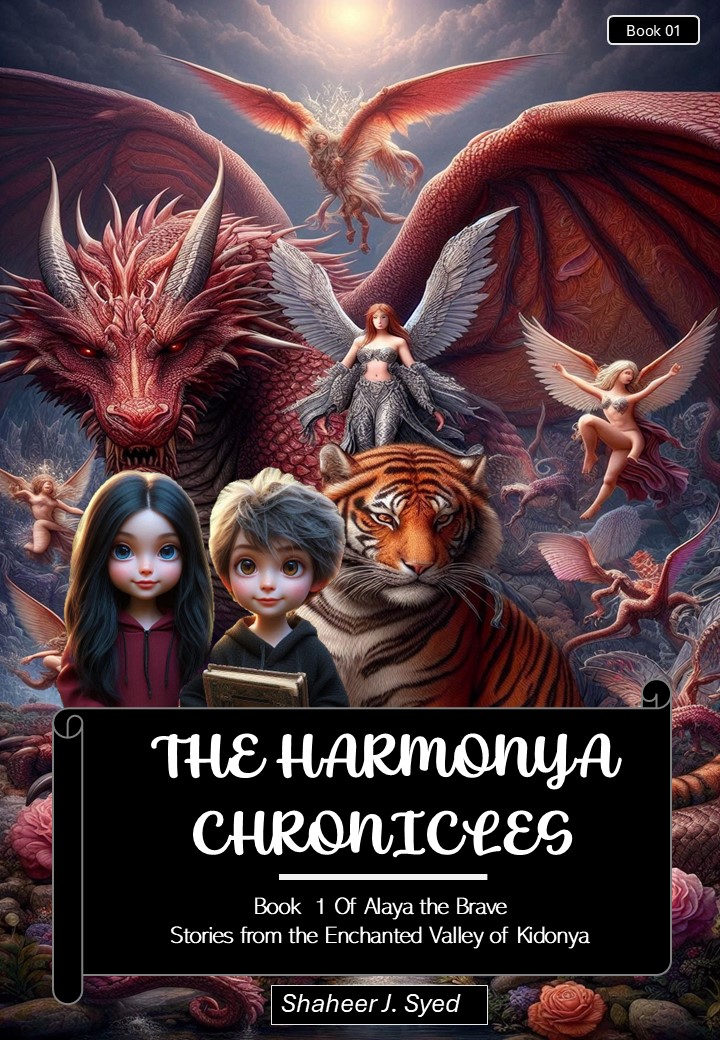
Start your Saga Journey with Book 01 of Alaya the Brave!
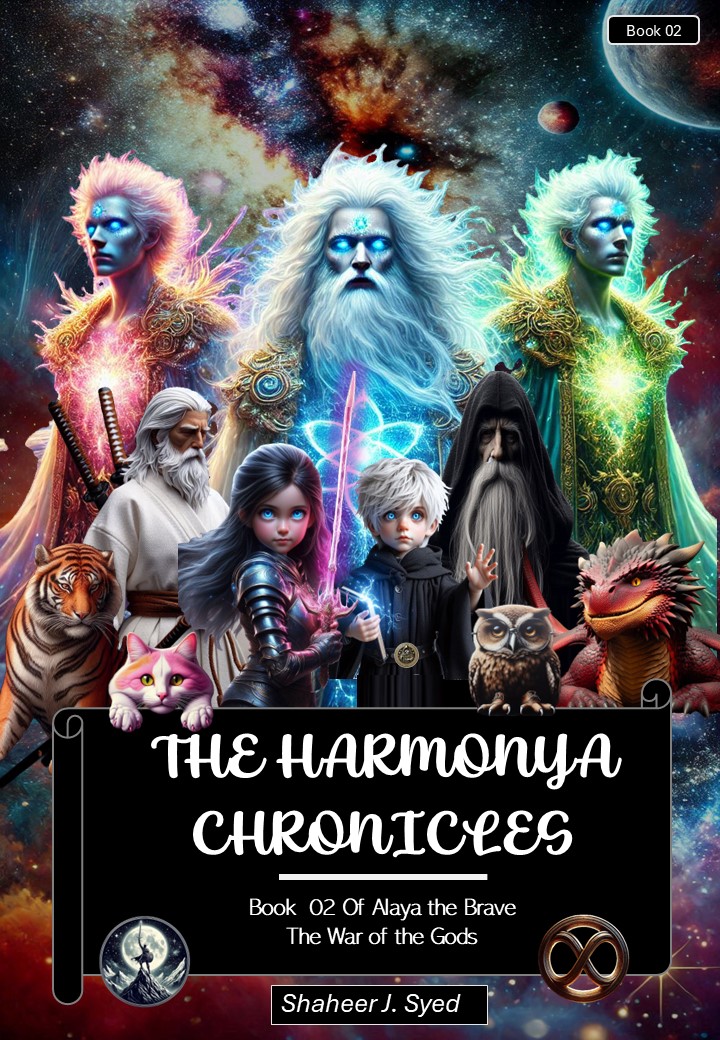
Continue your Journey with Book 02 of Alaya the Brave!


Why is Everyone Listening to "The Rise of The Storm Bringer"?


The Harmonya Chronicles Clubs!
Which warrior are you?
Join our warriors in their epic adventures today!
© 2023. All rights reserved.