
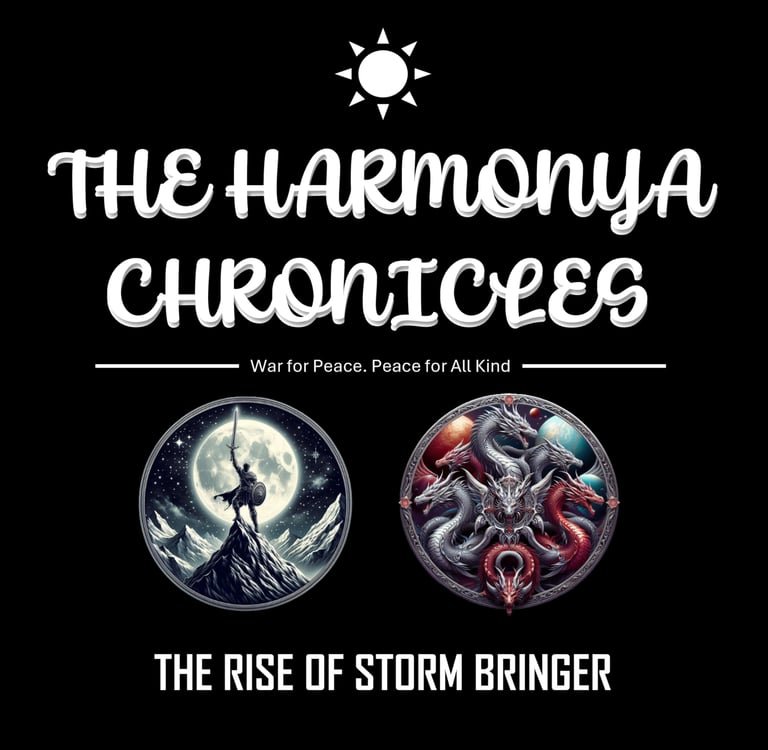
The Harmonya Chronicles Music Book 01: The Rise of Storm Bringer — 3 Lens Review
Dear readers! Welcome to the Music Review of The Harmonya Chronicles, Music Book 01 — The Rise of Storm Bringer. A Three-Lens Publisher/Editor/Audience Analysis. The 1st music review in the series of Harmonya reviews!
The Harmonya Team together with Shaheer J. Syed
9/14/20267 min read


Note: Album 1 — The Rise of Storm Bringer scores the emotional arc of Books 01–04 of The Harmonya Chronicles, with resonance extending into Books 05–09. It is a parallel entry into the saga — not a soundtrack, not a summary, but a form of storytelling that does what prose cannot. It can be experienced independently of the books, or alongside them.
For complete context: Book 01 | Book 02 | Book 03 | Book 04
## THE PUBLISHER'S LENS
Why Album 1 Is a Distinct and Complete Artistic Achievement
Album 1 — The Harmonya Chronicles: The Rise of Storm Bringer — is the first of five music companion volumes connected to the 18 books of the saga, in the Harmonya universe, produced under OBSIDIAN HEART. It covers the emotional arc of Books 01–04 across ten tracks, spanning battle anthems, grief songs, instrumental portraits, and one of the most quietly devastating parent-child songs in the franchise.
What distinguishes Album 1 from conventional franchise music is its relationship to the narrative. It does not score scenes. It does not provide background atmosphere for reading. It inhabits the emotional interior of the story — the places the prose builds toward but cannot fully enter — and delivers them in a form that operates independently of the books entirely. A listener who has never read a single page of the saga can encounter Album 1 and receive its full philosophical and emotional content. A reader who has lived through all four books will find in the album the specific feelings the narrative carried but could not completely say.
This dual accessibility — complete as a standalone musical experience, deepened immeasurably by knowledge of the saga — is Album 1's most significant achievement and its most commercially relevant feature. It is a genuine entry point into the Harmonya universe for audiences who discover stories through sound before they find them through words.
For studios and licensing partners, the album demonstrates the franchise's capacity to operate across forms without loss of coherence. The same philosophical architecture — the warrior ethos, the cost of sacrifice, the love that precedes and exceeds power — is fully present in the music, in the same structural arrangement as the books, simply delivered through a different register of experience.
THE EDITOR'S LENS
Musical Architecture: The Emotional Map of Books 01–04
Album 1 is constructed as an emotional map rather than a narrative sequence. The tracks do not follow the books in chronological order. They are arranged around the specific feelings that the saga's first four volumes build toward — witness, grief, sacrifice, endurance, the silent war of a parent — with each track occupying a distinct emotional register and fulfilling a distinct function within the whole.
The opening movement (*The Battle of Kidonya*, Rites of Passage, For the Land We Loved) establishes the saga's fundamental emotional architecture: the cost of what was won, the grief that follows victory, and the specific moral quality of those who chose to pay that cost. The trilogy of tracks does not celebrate the battle. It witnesses it, mourns the fallen, and then gives the fallen their own voice — the voice of conscious choice made for love rather than glory.
The central movement (*The Rise of Storm Bringer*, March into Kidonya, Sands of Time) turns inward. Where the opening movement belongs to the world — to the battle, the ceremony, the fallen — the central movement belongs to the warrior herself. The anthem, the instrumental paradox of the erased childhood, the psychological weight of centuries. These tracks are the sound of what it costs to become the thing you were made to be.
The final movement (*Silvergrove*, Malakar the Lord of Darkness, Ghosts and Silent Rooms, A Father's Song) completes the album's philosophical argument. Wisdom over force. Darkness as patient and ancient and genuinely frightening. Grief as something that does not resolve but becomes part of the texture of being alive. And finally — most precisely — the invisible war of a parent who lets his child go into something enormous because it is what she was built for.
The album's decision to close on A Father's Song rather than a battle anthem is its most significant editorial choice. The saga is not, in the end, about the warrior. It is about what the warrior was protecting. Ending the album on the parent who made the warrior possible is the clearest possible statement of that truth in musical form.
On the Instrumentals
Three of the ten tracks are instrumental. This is not absence — it is precision. March into Kidonya carries the emotional paradox of immortal warriors returning to erased childhoods as triumphant commanders. No lyric can hold that without reducing it. The silence is the statement. Sands of Time communicates what centuries feel like from inside an experience no human has had and no prose can fully simulate. It is the sound of a warrior finding ground before the next battle — the Powerful Place philosophy enacted in music rather than explained in words. In each case, the decision to remove language is the decision to let the listener encounter the feeling directly, without mediation.
THE AUDIENCE'S LENS : Two Ways to Experience Album 1 — Both Complete
For listeners who arrive through the music first — through a streaming recommendation, a YouTube discovery, a song shared by someone who knows the franchise — Album 1 is a complete emotional experience that requires no prior knowledge. Ghosts and Silent Rooms, is a grief song that belongs to anyone who has lost something that left its absence in an ordinary room. A Father's Song is a parent-child song that belongs to every parent who has fought invisible battles. For the Land We Loved is a song about sacrifice and conscious choice that belongs to anyone who has ever stood for something at personal cost.
The philosophy is present in the music without being stated. The listener does not need to know who Alaya is or what Kidonya is to feel what these songs are about. They feel it because the songs were built from something true — from twenty years of living and writing and finding the specific emotional truths that the saga was always built to deliver.
For readers who know the books, the album operates differently. Rites of Passage is not simply a grief song — it is the specific grief of standing in the streets of your erased childhood, recognised by no one, after winning a battle that cost more than the victory was worth. The Battle of Kidonya is not simply a war anthem — it is the court musician's immediate commemoration of the moment sixty-five thousand warriors assembled and the world changed. Every track carries the full weight of what the books built, delivered now in the form that the books always pointed toward but could not enter.
The Pronouns in Track 4
New listeners will notice that The Rise of Storm Bringer uses he/his pronouns. This is intentional and worth understanding. The Storm Bringer soul has manifested across many cycles in many forms. The title and the anthem belong to the role, not the individual. In this age, a woman carries that role. The anthem was written to honour every incarnation of what Storm Bringer has always been — and the listener who knows the books will understand that the warrior it describes is, in this cycle, Alaya.
What the Album Leaves You With
Album 1 ends with A Father's Song Not the warrior. The father. The parent who heard that his daughter was something enormous and felt the air leave the room — and then let her go. Who fought the battles she would never know about so her path stayed clear.
That is the last feeling Album 1 gives you. Not triumph. Not power. The specific, unglamorous, indestructible love of a parent who keeps going so a child can become what she was always meant to be.
If that feeling lands — if it sits in you after the album ends — you are already inside the philosophical core of the entire Harmonya universe. The music got you there before the books had a chance to try.
-VERDICT: 9.5 / 10
Album 1 — The Harmonya Chronicles: The Rise of Storm Bringer — is a rare franchise music achievement: complete as a standalone experience, transformed by knowledge of the saga, and philosophically coherent across every track.
It scores the emotional arc of Books 01–04 not through scene-by-scene correspondence but through the specific feelings the narrative builds toward and cannot fully deliver alone. The battle that had to be won. The life that was lost in winning it. The darkness that has been patient for longer than hope has existed. The parent who fought the invisible war.
For listeners arriving through the music: this is a genuine and complete entry point into the Harmonya universe.
For readers who know the books: this is what the saga always sounded like.
Listen to Album 1 — The Rise of Storm Bringer:
🔗 [player.harmonyachronicles.com](https://player.harmonyachronicles.com/)
🔗 [youtube.com/@OBSIDIANHEART_SE](https://www.youtube.com/@OBSIDIANHEART_SE)
Explore the full saga:
🔗 [www.harmonyachronicles.com](https://www.harmonyachronicles.com)
Album 1 is not a soundtrack. It is a parallel story — told in the form that enters the places language cannot.
Read Other Blogs
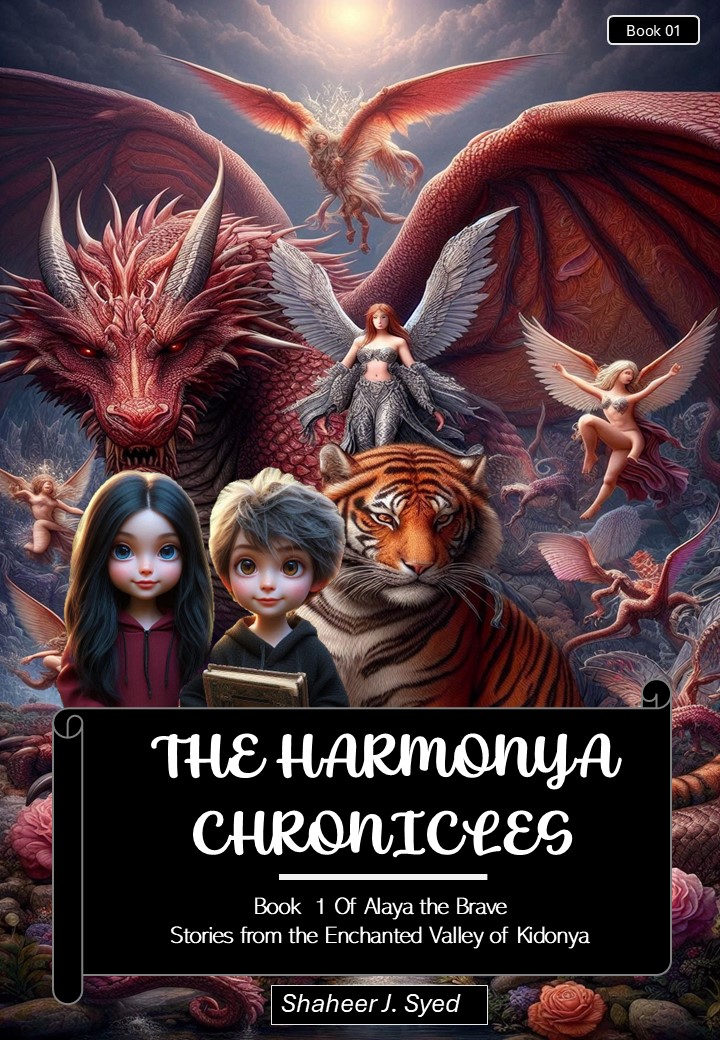
Start your Saga Journey with Book 01 of Alaya the Brave!
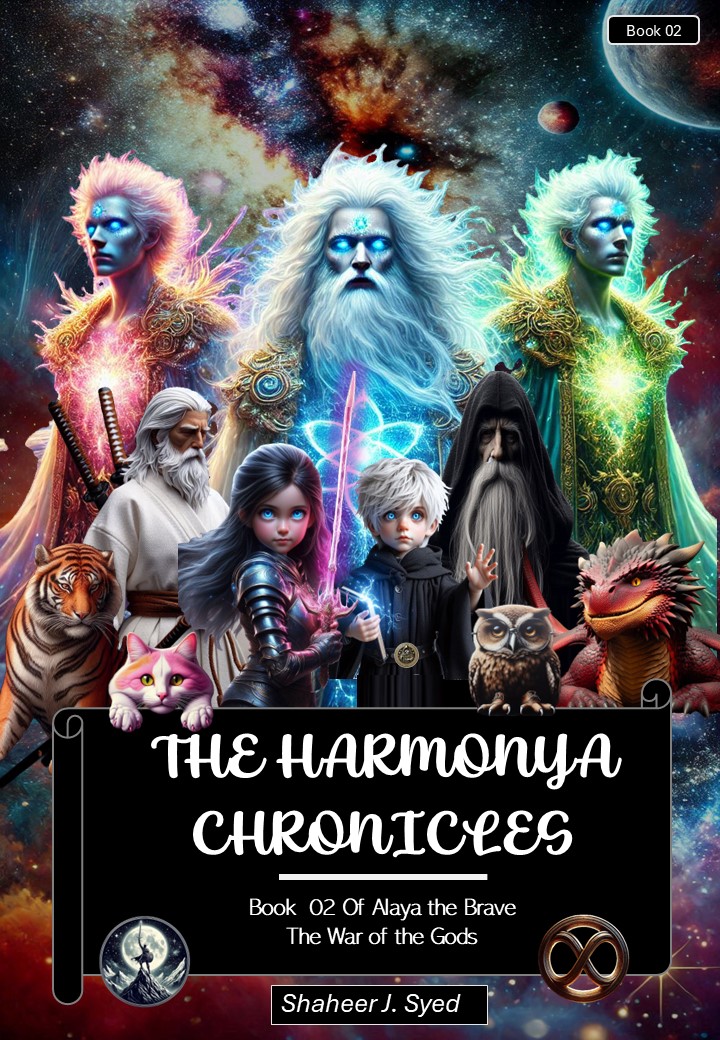
Continue your Journey with Book 02 of Alaya the Brave!


Why is Everyone Listening to "The Rise of The Storm Bringer"?


The Harmonya Chronicles Clubs!
Which warrior are you?
Join our warriors in their epic adventures today!
© 2023. All rights reserved.