
The Harmonya Chronicles Music Book 05: The Inner Symphonies — 3 Lens Review
Dear readers! Welcome to the Music Review of The Harmonya Chronicles, Music Book 05 — The Inner Symphonies. A Three-Lens Publisher/Editor/Audience Analysis. The 4th music review in the series of Harmonya reviews!
The Harmonya Team together with Shaheer J. Syed
11/2/20269 min read


The Harmonya Chronicles Music Book 05: The Inner Symphonies. A Three-Lens Review: Publisher / Editor / Audience. The 4th Music Review in the series of The Harmonya Chronicles reviews
Note: The Inner Symphonies — Album 5 — is fundamentally different from Albums 1, Album 2 and Album 3. It is not scored to the saga. It is not tied to specific books or characters or arcs. It is a philosophical and personal album — fifteen instrumental works mapping the complete arc of inner awakening, drawn from twenty years of lived experience. It connects directly to The Powerful Place, the Warrior's Handbook trilogy, A Story Called Life, and Responsibility After Justification. It can be experienced independently of every other work in the universe, or as the musical embodiment of the complete philosophical system.
THE PUBLISHER'S LENS
Why The Inner Symphonies Is the Most Distinct and Most Universal Work in the Harmonya Music Universe
The Inner Symphonies occupies a category of its own within the Harmonya franchise. Albums 1, Album 2 and Album 3 are music companions to the saga — parallel texts that score the emotional arcs of specific books and characters. The Inner Symphonies is none of those things.
It is fifteen instrumental symphonies mapping the complete arc of inner awakening — from the person who believes they are a drop searching for the ocean they came from, to the moment the truth arrives: you were never the drop. You were carrying an ocean. The arc is not drawn from the narrative of the saga. It is drawn from twenty years of walking the path that The Powerful Place, the Warrior's Handbook trilogy, A Story Called Life, and Responsibility After Justification describe. These symphonies were not composed from inspiration. They were extracted from experience.
This distinction is the album's most significant commercial and artistic asset. Because The Inner Symphonies is not tied to any specific story or character, it is accessible to every human being who has ever navigated the specific, ordinary, irreversible difficulty of being alive — grief, identity under pressure, the endurance required when progress offers no comfort, the yielding that comes not from weakness but from the intelligence of the river, the integration of wounds that do not close but can be carried within an expanded self.
The Powerful Place gave this journey its framework. The Warrior's Handbook trilogy gave it thirty lessons. A Story Called Life gave it its experiential ground. Responsibility After Justification gave it its formal philosophical articulation. The Inner Symphonies give it sound — direct, wordless, without the mediation of narrative or argument.
For studios and licensing partners, The Inner Symphonies represents the franchise's broadest entry point: music that belongs to anyone who has walked any portion of this arc, whether or not they have read a single Harmonya book. Every wisdom tradition is represented — sacred texts from the Quran, Bible, Bhagavad Gita, and Dhammapada woven through all fifteen symphonies, all pointing at the same truth from different directions, none required to yield to the others. This is a work of genuine universality.
THE EDITOR'S LENS
Musical Architecture: Fifteen Symphonies, Five Movements, One Complete Journey
The Inner Symphonies is structured in five movements of three symphonies each, except the final movement which contains two. The arc moves from grounding through recognition, reorientation, expansion, and transcendence — not as a sequence of achievements but as a map of depth. The listener does not move through these stages once and leave them behind. They deepen into them. The earlier stages remain operative at every later point.
This mirrors the structural principle of the Warrior's Handbook exactly: the codexes are not stages to be completed. They are levels of depth that operate simultaneously. The Inner Symphonies enacts this architecturally.
Part I — Grounding and Survival (Symphonies I–IV)
The most important thing to understand about the arc is where it begins: with weight, not with promise. Symphony I (Emotional Release) creates space without offering resolution — the Warrior's Handbook's distinction between catharsis and genuine letting go. Symphony II (Identity) runs at 83 BPM — the fastest in the arc — because endurance is not slow. Identity maintained without witnesses is the most demanding and least celebrated form of courage. Symphony III (Endurance) is twenty years of continuing without knowing why — the specific, unglamorous, philosophically precise form of persistence that the Endurance Codex describes in Lesson V. Symphony IV (Resonance) is the first moment of alignment — the self beginning to hear itself. For the first time in perhaps a long time, no gap between interior and exterior.
The connection to The Powerful Place is direct and structural: the five pillars (mindfulness, self-awareness, self-reflection, affirmations, self-love) are the daily practice that makes Part I possible to sustain. Symphony I is not a single event. It is a practice. The Powerful Place teaches the practice. The symphony is what the practice sounds like over time.
Part II — Recognition and Inner Tension (Symphonies V–VII)
The self has found its frequency. Now it must live with what that frequency reveals. Symphony VI (Dissonance) is the shortest and loudest track on the album — deliberately. Real people carry genuine contradictions. The Warrior's Handbook's Lesson IX: pain is a teacher. The dissonance intensifies before it moves. The resolution is not available at acknowledgment. This is the honest truth of A Story Called Life Book 1 — the first book written at the beginning of the journey, before the mechanism for holding contradictions had fully developed.
Symphony VII (Presence) is seventeen minutes. Five musical traditions from five continents playing simultaneously without merging — Chinese guzheng, Japanese shakuhachi, Nordic Kulning, Turkish Ney, deep house pulse. Beneath all five: a single unbroken lounge pulse, the heartbeat that made all five voices possible simultaneously. This is unity through full, honest coexistence of everything actually here. The Powerful Place's fourth principle — Respond, not React — is not a technique at this level. It is a state of being that takes seventeen minutes to enter and cannot be rushed.
Part III — Reorientation (Symphonies VIII–X)
This movement is A Story Called Life Book 3's philosophical territory made audible. Symphony VIII (Acceptance) is not approval but allowance — permitting reality to be what it is, not because it was right, but because fighting its existence consumes the energy that belongs to moving through it. The sharp techno pulse that drops into warm lounge — resistance arriving unexpectedly before it releases — is the honest structure of acceptance: you end warmer than you began, but not without the arrival of resistance first.
Symphony IX (Yielding) closes at its most quiet. The people who struggle most with yielding are not the weak but the ones who care most deeply — the Warrior's Handbook's recognition that the hardest form of patience is available only to those for whom the stakes are genuinely high.
Symphony X (Integration) is the most philosophically precise of the three: fractures coexist without repair. Harder than kintsugi. Some wounds remain marks, not golden seams. You are not repaired. You are expanded. This is the direct musical embodiment of the Responsibility After Justification thesis — the persistence of the effects of what has happened, held within an expanded capacity rather than resolved or erased.
Part IV — Expansion (Symphonies XI–XIII)
Symphony XI (Becoming) is eighteen minutes — the longest on the album. A Turkish dervish Ney alone for nearly ten minutes: the self spinning at its centre, the spinning itself the purpose, not the arrival. Then Nordic vastness. Then warmth. Then both together. A Story Called Life Book 2's mythic register made audible: the ordinary person discovering the archetype inside their ordinary life. Symphony XII (Communion) is three instruments from three worlds that do not merge — connection without dependency, presence without performance. The rarest form. Symphony XIII (Clarity) ends on a single Tibetan drum strike and long decay. Clarity is not comfortable. It is clean. And clean is not the same as easy.
Part V — Transcendence, Quiet and Non-Dramatic (Symphonies XIV–XV)
Symphony XIV (Continuum) carries the violin throughout all three movements without break — it is the through-line, the continuum, the thread that proves nothing was ever truly separate. Symphony XV (Transcendence) is not above life but through it. The Tibetan bowl opens. The Ney and violin and trance beat and Nordic vocals rise together. The final truth: you were not the drop searching for the ocean. You were never separated from what you were searching for. You were carrying an ocean.
This is the Responsibility After Justification thesis at its deepest register — not as argument but as experience: nothing you have ever done is finished. The thing you did is still doing itself. You are not the drop. You are carrying an ocean.
THE AUDIENCE'S LENS
Who This Album Is For — and Why That Is Everyone
The Inner Symphonies does not require the saga. It does not require the philosophy books. It does not require any prior knowledge of the Harmonya universe. It requires only a willingness to sit with fifteen instrumental works and allow them to move through the specific arc they were extracted from — not composed toward, extracted from — twenty years of genuine human experience.
The listener who is in the middle of Part I of their own arc — carrying grief they have not yet found a way to hold, maintaining identity under pressure without witnesses, enduring without reassurance — will find in Symphonies I through IV a map of exactly where they are. Not comfort in the easy sense. A companion that knows the terrain.
The listener who has navigated reorientation and finds themselves in the expansion of Part IV — discovering who they are when the labels are removed, learning the difference between connection and dependency — will find in Symphonies XI through XII the specific sound of that particular kind of freedom.
The listener who arrives at Symphony XV may find it arrives as recognition rather than discovery. You were carrying an ocean. That sentence does not announce itself. It simply becomes true.
The Connection to the Philosophy Books
For readers of The Powerful Place, the Warrior's Handbook trilogy, and A Story Called Life, The Inner Symphonies is the musical completion of what the books opened. The Powerful Place gave you the practice. the Warrior's Handbook gave you the structure. A Story Called Life gave you the experiential ground. The Inner Symphoniess give you the direct, wordless encounter with what all three were always pointing toward.
For readers of Responsibility After Justification, Symphony X (Integration) and Symphony XIV (Continuum) are the formal thesis experienced rather than argued — the persistence of effects, the living inheritance, the obligations that continue wherever consequences endure, held not as burden but as the condition of being expanded rather than broken by what you have carried.
The Connection to the Saga
The masters — Laoshi, Hiroshi, Seraphina — have each walked this arc. Not once. Every cycle. The loneliness of the in-between — the space between cycles where nothing exists yet, no warrior, no fellowship, no world to stand in — is the specific cost of being unable to reach Symphony XII (Communion) without rebuilding from the beginning with a new being every cycle.
The Inner Symphonies are what they carry between. The only continuous thread.
VERDICT: 10 / 10
The Inner Symphonies is the most complete and most universal work in the Harmonya music universe.
It is the direct musical embodiment of the complete philosophical system — The Powerful Place, the Warrior's Handbook trilogy, and A Story Called Life, Responsibility After Justification — delivered without words, without narrative, as direct experience of the arc those books describe. Fifteen instrumental symphonies. Five movements. One complete journey from the person who believes they are small to the moment the truth arrives: you were carrying an ocean.
For listeners arriving with no prior knowledge: a complete, honest, deeply human musical experience that belongs to anyone who has navigated any portion of this arc.
For readers of the philosophy books: the sound of everything those books were always pointing toward, finally entered directly.
For readers of the saga: the music the masters carry between cycles. The only continuous thread.
Listen to The Inner Symphonies:
🔗 [player.harmonyachronicles.com](https://player.harmonyachronicles.com/)
🔗 [youtube.com/@OBSIDIANHEART_SE](https://www.youtube.com/@OBSIDIANHEART_SE)
Explore the philosophy books:
🔗 [www.harmonyachronicles.com/saga-philosophy](https://www.harmonyachronicles.com/saga-philosophy)
Explore the full saga:
🔗 [www.harmonyachronicles.com](https://www.harmonyachronicles.com)
These were not composed from inspiration. They were extracted from experience. That is the only difference that matters. And it makes all the difference.
Read Other Blogs
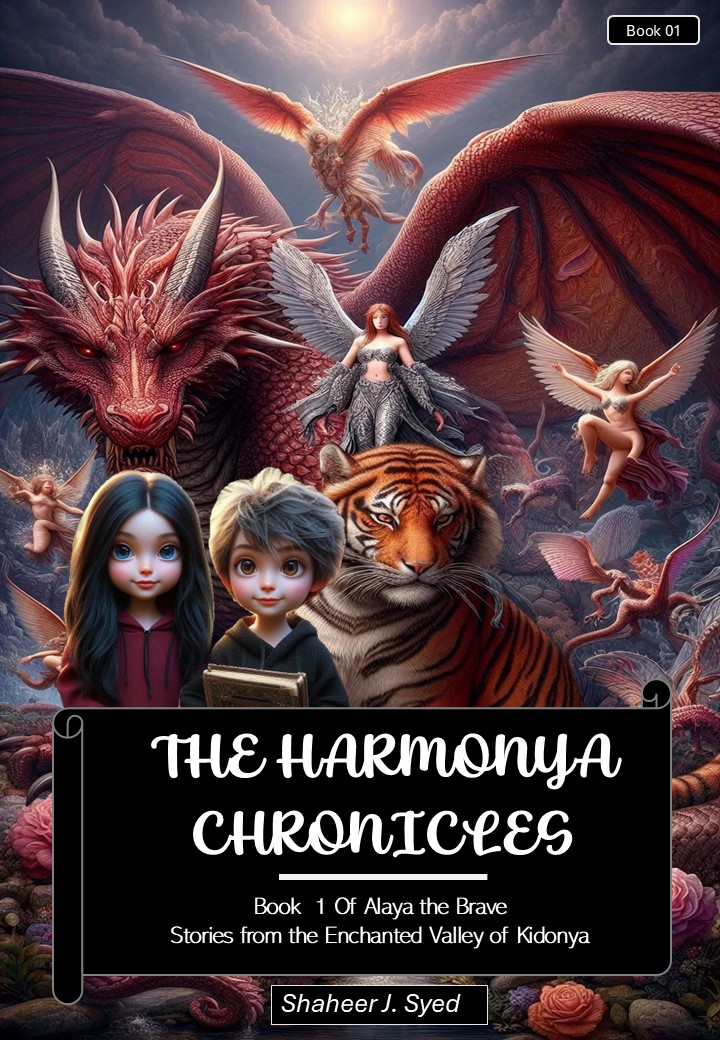
Start your Saga Journey with Book 01 of Alaya the Brave!
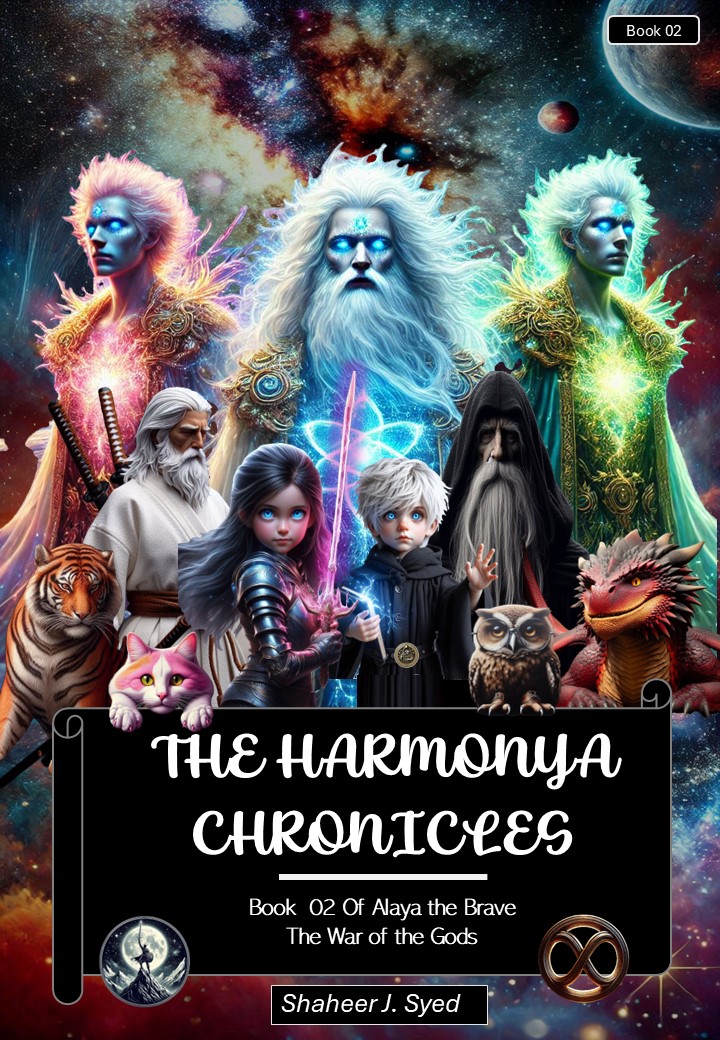
Continue your Journey with Book 02 of Alaya the Brave!


Why is Everyone Listening to "The Rise of The Storm Bringer"?


The Harmonya Chronicles Clubs!
Which warrior are you?
Join our warriors in their epic adventures today!
© 2023. All rights reserved.