
The Harmonya Chronicles Music Book 06: Harmonya Rhymes — 3 Lens Review
Dear readers! Welcome to the Music Review of The Harmonya Chronicles, Music Book 06 — Harmonya Rhymes. A Three-Lens Publisher/Editor/Audience Analysis. The 5th music review in the series of Harmonya reviews!
The Harmonya Team together with Shaheer J. Syed
11/23/20268 min read


The Harmonya Chronicles Music Book 06: Harmonya Rhymes.
A Three-Lens Review: Publisher / Editor / Audience. The 5th Music Review in the series of The Harmonya Chronicles reviews
Note: Harmonya Rhymes is the children's music companion to The Harmonya Chronicles — twelve picture-book songs for readers aged 4–8, covering the characters and world of Books 01–02. It is designed to be sung, not read quietly, and is available on the dedicated Harmonya Player as all the other releases . It is a complete and independent experience. It is also the youngest entry point into the entire Harmonya universe.
THE PUBLISHER'S LENS
Why Harmonya Rhymes Is the Most Strategic Work in the Harmonya Universe
Harmonya Rhymes — Music Book 06 — is seventeen singalong songs for children aged 4–8, covering the characters and world of Books 01–02 of The Harmonya Chronicles. It is illustrated, designed to be sung aloud, and available on the dedicated Harmonya Player.
It is also the most strategically significant work in the franchise.
Not because it is the most complex or the most philosophically demanding — it is neither. Because it is the youngest door, and the youngest door determines the longest relationship. A child who encounters Alaya at age four and carries that encounter forward will arrive at the full saga when the time is right already knowing the world. Already knowing the girl who wanted to change her name. Already knowing that courage means caring even when scared. Already knowing that the strongest beings need help. The saga will feel, when it arrives, not like something new but like something they were always moving toward.
For families, educators, and any parent navigating the challenge of introducing children to meaningful stories rather than merely entertaining ones, Harmonya Rhymes solves a specific problem: it delivers the philosophical core of the Harmonya universe — self-determination, relational courage, the parent as silent warrior, imagination as power — in a form that a four-year-old can receive without translation, without explanation, through the most direct form of childhood engagement: singing.
For studios and licensing partners, the children's music companion represents the franchise's broadest demographic reach. Album 1 through 5 address listeners from teenagers through adults. Harmonya Rhymes addresses the child who will grow into all of those audiences — and who, if the encounter happens early enough, will carry the universe with them across that entire arc of development.
THE EDITOR'S LENS
Musical Architecture: Seventeen Songs, Seventeen threads
Harmonya Rhymes is structured as a journey through the characters and world of Books 01–02, with each song giving a specific character or moment its own complete musical statement. The seventeen tracks include alternate versions of five songs — The Girl Who Wanted to Change Her Name, The Moon Party Song, Storm Bringer, Hino the Dragon, and Alyna the Unicorn — each alternate offering a different emotional register or arrangement of the same truth. This is a deliberate design: the same song reaching the same child differently at different moments, or reaching different children through different doors into the same song.
The twelve core songs do not tell the story of those books. They give each significant element of those books its own song — a complete, singable, emotionally true account of one thing. The alternate versions deepen that offering, ensuring that the album meets children where they are rather than requiring them to meet it.
This is the correct structural choice for children's music. Children do not need narrative sequence. They need individual points of contact — a character they recognise, a feeling they can enter, a truth they can carry forward in a form they can repeat. Each song is that point of contact.
The opening — The Girl Who Wanted to Change Her Name — is the saga's origin moment in its most essential form. Aloo, Aloo, I want a change. The fairies kiss her forehead. She becomes Alaya. No cosmology required. No eighteen-book architecture necessary. One act, one name, one truth: you can decide who you are. That truth is present in its most concentrated form here, available to a child who cannot yet read, delivered through a song they will carry in their body before they carry it in their mind.
The world-building songs — Welcome to Kidonya, The Moon Party Song — do the essential work of making the universe feel real and safe before anything difficult arrives. Cats debate snacks. Dogs write verse. Fairies sprinkle confetti. Look for the flutter of a fairy's wing / Listen to the secrets that the forests sing. This is not decoration. It is the specific quality of wonder that makes a child want to live in a world — and a child who wants to live in Kidonya at age five will want to return to it at age fifteen in the full saga.
The creature songs — Itcan Magic in the Rain, Tora the Tiger, Hino the Dragon, Alyna the Unicorn — each carry a distinct philosophical truth in their encounter with Alaya. Itcan: love and responsibility toward those who need you. Tora: even the strongest need help. Hino: courage is discovered, not possessed — step on fire, warm and slow / feel the light inside you glow. Alyna: trust and imagination summon what you need. Four songs. Four truths. Each one accessible to a child before the complexity that surrounds those truths in the full saga is anywhere near visible.
The central duo — I Wanna Grow Up Fast and Brave Together — carry the Books 01–02 arc of Alaya and Daniyal in compressed form. Daniyal's impatience is the universal child experience — being big is hard, you know! — resolved not by achieving the wished-for state but by the wisdom that growth happens a little every day. Brave Together is the saga's most important relational claim in its simplest form: courage is not solitary. We are strong when we care. That couplet is the whole of the warrior ethos for a child who cannot yet hold the warrior ethos in its complete form.
***My Greatest Job Is You*** is the album's philosophical centrepiece — the parent as silent warrior, the battles fought out of sight, the hand held every morning. I won't be written in the legends / I won't fight battles grand / But I'll be here each morning with you / I'll always hold your hand. This is the children's version of A Father's Song from Album 1. The same philosophy — expressed for the child who is being sung to rather than the adult who is singing. Both registers are complete. Both carry the full weight of what Baba Al-Mir represents in the saga. Neither requires the other to function.
The closing — Storm Bringer — is the Album 1 anthem in full, accessible now to the youngest readers. Same lyrics. Same story. The saga reaching across every age simultaneously.
THE AUDIENCE'S LENS
For Children (Ages 4–8): A Complete Experience
For children, Harmonya Rhymes requires nothing. No prior knowledge. No adult explanation. Twelve songs that introduce a girl who names herself, a magical valley full of talking animals and singing forests, a father who fights invisible battles, and a warrior whose name the whole world came to know.
The philosophical truths are fully present — self-determination, relational courage, the value of imagination, the gift of trying again — but they arrive the way all the best children's truths arrive: through the story, through the song, through the feeling, before the concept has been named. Children do not need to know they are learning that courage is relational when they sing Brave Together. They simply know it is true.
The songs are designed to be sung, not read quietly. This is the right design. Children learn through repetition, through sound, through the physical act of singing. A child who has sung Aloo, Aloo, I want a change fifty times has received the first act of self-determination as a lived, embodied truth — not a concept they were taught.
For Parents and Families: A Shared Entry Point
For parents reading and singing alongside their children, Harmonya Rhymes offers a second register of experience that the child does not yet access. My Greatest Job Is You carries different weight for a parent than for the child being sung to. The parent who recognises in Baba Al-Mir's song their own invisible war — the mornings they showed up, the battles they fought out of sight, the hands held when holding was all that was possible — is receiving the same philosophical truth as the child, through a completely different door.
This dual register — complete for the child, complete for the adult — is the album's most sophisticated achievement. The parent and child are receiving the same truth from different sides of it simultaneously. That shared experience, even when the child does not yet understand what the parent is feeling, is the kind of thing that stays.
The Bridge to Everything Else
Every song in Harmonya Rhymes is a seed. The child who knows Alaya's name and Kidonya's colours and Baba Al-Mir's promise will not encounter the full saga as strangers to its world. They will arrive already having been there — at the youngest level, in the warmest form — and the recognition will feel like returning rather than arriving.
That continuity — from the first song a child sings to the last page of Book 18 — is the Harmonya universe's most human achievement. A story that can hold a four-year-old and an adult reading their eighteenth volume at the same time, in different registers of the same truth, is a story that has understood something most stories do not attempt.
VERDICT: 10 / 10
Harmonya Rhymes — Music Book 06 — is a complete, honest, and philosophically precise children's music companion that carries the full core of the Harmonya universe in the form most appropriate for its youngest audience.
Seventeen songs. Seventeen threads leading into the same room. Not simplified versions of the philosophy — the philosophy in its most distilled form, delivered through the most direct channel available: a song a child can sing before they can read. Including alternate versions that ensure the same truth reaches the same child differently across different days and different moods.
For children: the youngest door into a universe that will grow with them.
For parents: a shared experience that lands differently on each side of it — and completely on both.
For the universe: the beginning of the longest relationship.
Listen to Harmonya Rhymes:
🔗 [player.harmonyachronicles.com](https://player.harmonyachronicles.com/)
Explore Harmonya for Kids:
🔗 [www.harmonyachronicles.com/the-harmonya-chronicles-for-kids-fantasy-books](https://www.harmonyachronicles.com/the-harmonya-chronicles-for-kids-fantasy-books)
Explore the full saga:
🔗 [www.harmonyachronicles.com](https://www.harmonyachronicles.com)
The youngest door opens into the same room as every other. The child who sings these songs today is already inside the universe.
Read Other Blogs
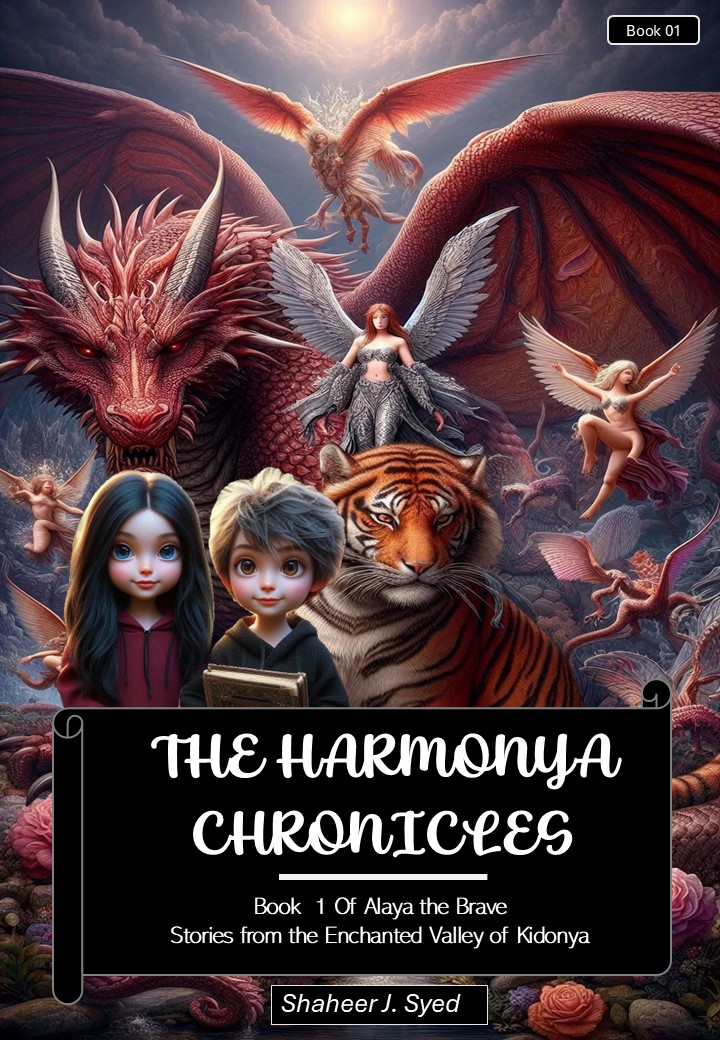
Start your Saga Journey with Book 01 of Alaya the Brave!
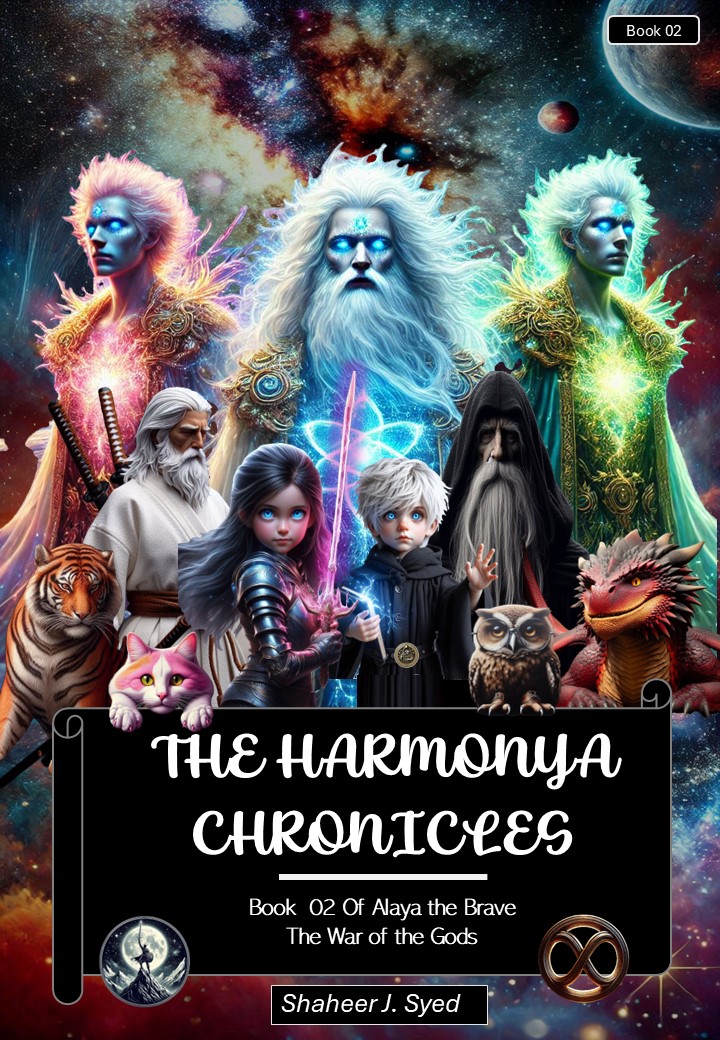
Continue your Journey with Book 02 of Alaya the Brave!
Why is Everyone Listening to "The Rise of The Storm Bringer"?


The Harmonya Chronicles Clubs!
Which warrior are you?
Join our warriors in their epic adventures today!
© 2023. All rights reserved.