
Book 04 Review - Sands of Time Through 3 Lenses | Analysis
Book 04: From Sands of Time analyzed through publisher, editor & audience lenses. Temporal complexity, quest architecture & emotional depth. Professional review.
The Harmonya Team
1/5/20268 min read
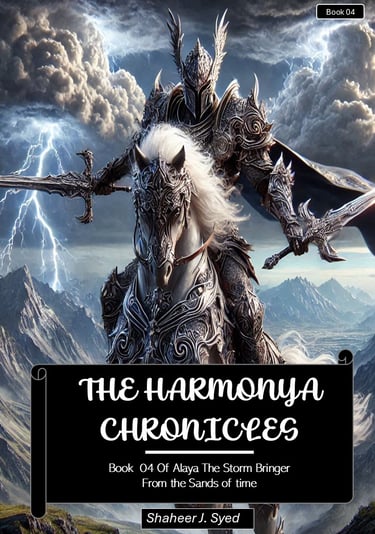
Note: This review follows Book 03: The Fellowship of the Seven, where the legendary warriors united and secured their first major victory. For full context on the saga's foundation and escalating architecture, read: Book 01 | Book 02 | Book 03.
THE PUBLISHER'S LENS
Mythology Expansion: The Temporal Layer
Book 04 introduces a critical dimension absent from Books 01-03: temporal complexity. The title From the Sands of Time isn't metaphorical—this book explores how time itself operates as weapon, mystery, and burden. For franchise architects, this expansion demonstrates the saga's depth reserves. Where lesser properties exhaust their mythology early, The Harmonya Chronicles reveals new layers precisely when needed.
Flashbacks to previous warrior cycles, glimpses of alternate timelines, and the weight of centuries-old decisions provide writers with storytelling tools beyond linear progression. Television adaptations thrive on such structural sophistication—Lost, Westworld, and Dark proved audiences embrace temporal complexity when emotionally grounded.
Character Spotlight Model Emerges
Books 01-03 focused primarily on Alaya and Daniyal. Book 04 begins rotating spotlight across the Fellowship, giving individual warriors deeper exploration. This structure—which will define Books 05-11 as warrior-specific volumes—creates franchise sustainability. Each Dragon Warrior becomes potential spinoff protagonist while maintaining ensemble cohesion. Studios gain seven lead character options for demographic targeting and expanded universe content.
Episodic Structure: Quest Architecture
The book employs classic quest structure with modern pacing: each chapter represents distinct location with unique challenge (The Lake of Veils, The Ruins of Eldar, The Wailing Woods, The Serpent's Den, The Temple of Flames). This modular design provides natural episode breaks while advancing unified season arc. For adaptation, each location offers distinct visual identity and thematic focus—production design's dream.
THE EDITOR'S LENS
Narrative Structure: Quest as Character Development
Book 04's sophistication lies in its quest architecture serving dual purpose: each location (Lake of Veils, Ruins of Eldar, Wailing Woods, Temple of Flames) provides distinct challenge while revealing character depth. When Storm Bringer meets Zephyr as a stone-cursed warrior in the Ruins of Eldar—trapped for years after challenging the Mad King—the rescue isn't mere heroics but recognition of kinship. Zephyr's quest for his lost father mirrors Storm Bringer's own orphaned status, creating bond deeper than circumstantial companionship.
The quest structure allows systematic revelation of Storm Bringer's abilities and limitations. Collecting six elemental essences across dangerous territories demonstrates earned progression rather than arbitrary power acquisition. When these essences merge into Zulfeer through Goddess Prudentia's divine forging, the weapon carries weight of completed trials. This pattern—effort preceding reward—reflects the philosophical framework's emphasis on post-decision responsibility from After the Choice.
World-Building Deepens: Mysteries Revealed
Where Books 01-03 established Fellowship unity, Book 04 begins unraveling carefully planted mysteries. The revelation of Zulfeer's origins—forged by Goddess Prudentia from the six elemental essences Storm Bringer collected during quests—transforms the sword from magical artifact into living testament of earned power. The blade hums with consciousness, responds only to Storm Bringer's touch, and adapts its form to the wielder's thoughts. This isn't power granted arbitrarily but reward for completed trials.
Similarly, Zephyr's transformation from Itcan (the childhood panther companion) into Storm Bringer's immortal companion reveals the saga's layered planning. The bond formed innocently in Book 01 carries divine purpose. When Goddess Prudentia bestows the Mark of Prudentia on Zephyr, making him the first Panthera warrior to achieve immortal companion status, readers experience both surprise and recognition—the clues were present from the beginning.
These revelations demonstrate the saga's architectural sophistication: mysteries introduced early resolve satisfyingly while establishing new questions. What other childhood elements carry hidden significance? The pattern rewards close reading across volumes.
Cultural Depth: Harmonya as Mirror World
Book 04's true richness emerges in its cultural exploration. The Hidaman culture—with its volcanic landscapes, Senshi warrior traditions, and rites of passage ceremonies—provides anthropological detail rare in fantasy. The journey through multiple kingdoms (Thalasca, Solaria, Eldrathia, Nimboria) reveals distinct architectural styles, local customs, and regional governance structures.
The Rites of Passage ceremony (which inspired the trending song "Rites of Passage") grounds epic fantasy in universal human ritual. Warriors honoring fallen comrades, Storm Bringer raising Zulfeer skyward while speaking words of remembrance—these moments transcend fantasy tropes to touch genuine grief and honor. Harmonya becomes mirror to our world, where diverse cultures coexist, traditions matter, and loss leaves real scars.
This cultural specificity strengthens adaptation potential. Each kingdom offers distinct visual identity, costume design, and ceremonial traditions—production designer's paradise providing variety essential for sustained television storytelling.
Philosophical Framework Matures
The quest structure itself embodies The Powerful Place's principle of "awareness precedes action." Storm Bringer cannot simply demand Zulfeer; the sword emerges only after completing six trials that test different aspects of warrior character. Each elemental essence collected represents not just power gained but wisdom earned through confronting specific challenges.
The Wailing Woods sequence—where Zephyr searches for his lost father while Storm Bringer seeks the elixir of eternal life—explores how personal quests interweave with larger destiny. Master Laoshi's observation that "there are no coincidences" reframes their meeting not as chance but as divine orchestration. This connects to the saga's cyclical theme: individual agency operating within larger patterns of destiny.
The funeral scene and Rites of Passage ceremony ground philosophical themes in human ritual. When Storm Bringer raises Zulfeer over fallen warriors, the act transcends fantasy spectacle to become meditation on honor, sacrifice, and the weight of leadership. The Warrior's Handbook's teaching about "responsibility deepening after victory" manifests tangibly—winning battles means bearing witness to those who died securing that victory.
Pacing: Quest Momentum and Personal Stakes
Book 04 maintains momentum through its quest structure while deepening personal stakes. Each location presents distinct challenge requiring different warrior skills: the Lake of Veils tests perception, the Ruins of Eldar demand tactical combat, the Wailing Woods require emotional resilience, the Temple of Flames tests physical endurance. This variety prevents repetitive "defeat monster, move forward" pacing.
The integration of Storm Bringer's personal grief—grandmother's death occurring mid-quest—grounds fantasy adventure in human reality. The book doesn't compartmentalize emotion (grieve now, quest later) but shows how duty continues despite loss. When Storm Bringer performs the Rites of Passage for fallen warriors while carrying fresh grief, the ceremony carries double weight.
The book concludes not with triumphant victory but bittersweet completion: Zulfeer obtained, Zephyr bonded as companion, quests fulfilled—yet the cost (personal loss, warriors fallen) tempers celebration. This emotional complexity prepares readers for the saga's maturing tone as stakes escalate across remaining volumes.
THE AUDIENCE'S LENS
Emotional Grounding: The Duality of Identity
Book 04's most profound exploration centers on Storm Bringer's dual existence: Alaya the grieving granddaughter versus Storm Bringer the immortal warrior. When Alaya's grandmother passes away quietly in the night, the book doesn't retreat into fantasy escapism—it dwells in that human grief. The family huddles together, Baba arranges the funeral alone, and Alaya faces the Rites of Passage ceremony with fresh loss weighing on her heart.
This juxtaposition—mortal sorrow coexisting with immortal duty—grounds the saga's philosophical core. The current incarnation (Alaya) feels genuine human emotion while the ancient warrior soul (Storm Bringer) carries centuries of similar losses. The book explores how these identities integrate rather than conflict. When Storm Bringer raises Zulfeer over fallen warriors, speaking words she's spoken countless times across lifetimes, readers feel both the weight of repetition and the freshness of present grief.
This duality connects to A Story Called Life's emphasis on lived human experience within grand narratives. Epic destiny doesn't erase personal loss; it compounds it. The warrior who saves kingdoms still mourns her grandmother. This emotional authenticity distinguishes the saga from fantasy that treats heroes as invulnerable icons rather than vulnerable humans carrying extraordinary burdens.
Character Depth: Beyond Surface Powers
As individual warriors receive spotlight, their complexity emerges. They're not merely elemental types (fire warrior, water warrior) but individuals whose powers reflect psychological profiles. The book explores how centuries of reincarnation affect identity—are they truly the same people, or new souls carrying old burdens?
This questioning creates philosophical richness accessible to all ages. Younger readers experience adventure and discovery; adult readers recognize existential meditation on identity, purpose, and the weight of legacy. This multi-layered accessibility defines the saga's demographic reach.
Satisfaction Factor: Mythology That Rewards Investment
Book 04 rewards readers who paid attention in Books 01-03. References to the eclipse prophecy, callbacks to Master Laoshi's teachings, connections to Kidonya's original magic—these create "aha!" moments for engaged readers. The rereadability factor increases as earlier details reveal deeper significance.
Simultaneously, the book delivers immediate satisfactions: quest challenges overcome, new magical locations explored, Fellowship dynamics deepening through shared hardship. The balance between long-term payoff and present-moment reward prevents feeling like "setup book" despite being mid-arc positioning.
Discovery Moment: The Pattern Emerges
By Book 04, readers recognize the saga's structural intelligence. This isn't meandering fantasy but carefully architected mythology revealing itself systematically. Each book adds precise layers—origin, threat, unity, complexity—building toward conclusions readers trust will satisfy because the foundation proves so solid.
For those discovering the saga now, 11 books published means substantial material available immediately. The 25-book roadmap feels not daunting but exciting—confidence in the creator's ability to sustain quality across scope.
VERDICT FOR MEDIA ADAPTATION: 9/10
Book 04: From the Sands of Time demonstrates franchise maturity through controlled mythology expansion and temporal sophistication. For studios, this confirms the creator's ability to deepen complexity without losing accessibility—essential for multi-season storytelling.
The temporal elements provide adaptation flexibility: flashbacks, alternate timelines, prophecy sequences, and dimensional travel create visual variety while advancing narrative. The quest structure offers modular episode design with distinct location identities. The emotional grounding ensures spectacle serves character rather than overwhelming it.
For readers, Book 04 solidifies confidence in the 25-book journey. The mythology expands precisely when needed, character depth increases through spotlight rotation, and philosophical framework matures without becoming didactic. The pattern is clear: each book builds intelligently on what came before while establishing foundation for what follows.
Critical Observation: Books 01-04 establish complete a part of the act I architecture—origin, threat, unity, complexity—while simultaneously functioning as opening movement in five-act structure. This nested framework (smaller arcs within larger journey) distinguishes sophisticated franchise thinking from series that exhaust ideas or lose direction.
Next in series: Book 05 - Of Daniyal Aetherion (first warrior-specific spotlight, dimensional sorcery explored, and Daniyal's ancient wisdom revealed)
Explore the complete saga: www.harmonyachronicles.com
Observation for Industry: Four books deepen mythology systematically. Seven more published extend the arc. Fourteen planned complete the vision. Pattern: deliberate, controlled, architecturally sound. This is franchise-ready IP seeking screen partnership while window remains open.
Read Other Blogs
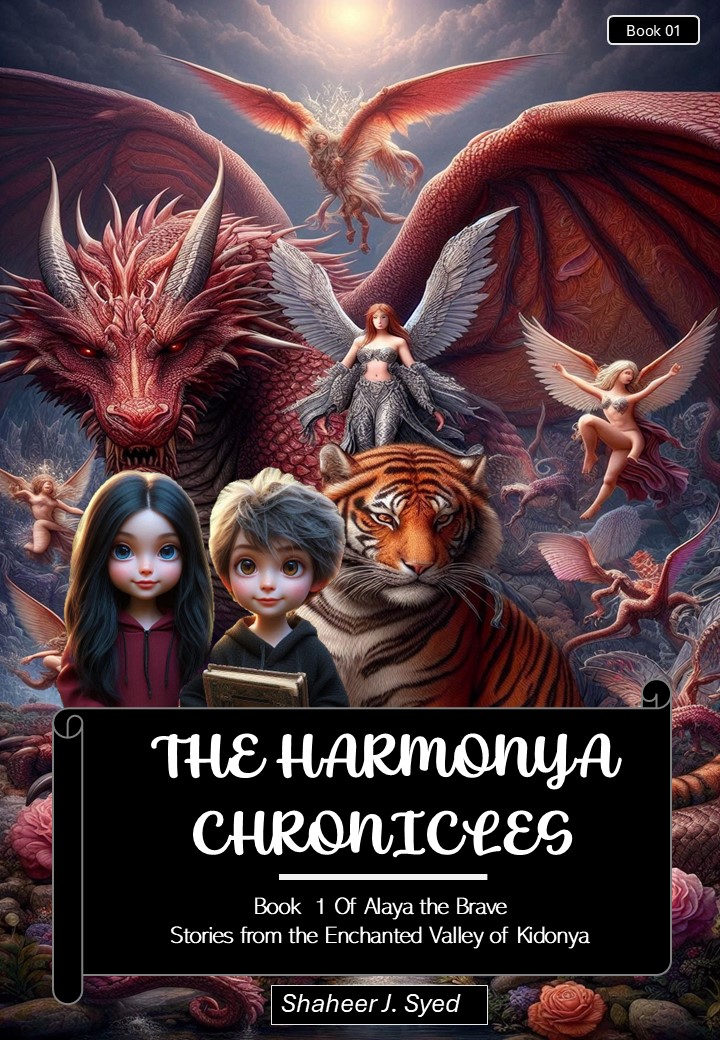
Start your Saga Journey with Book 01 of Alaya the Brave!
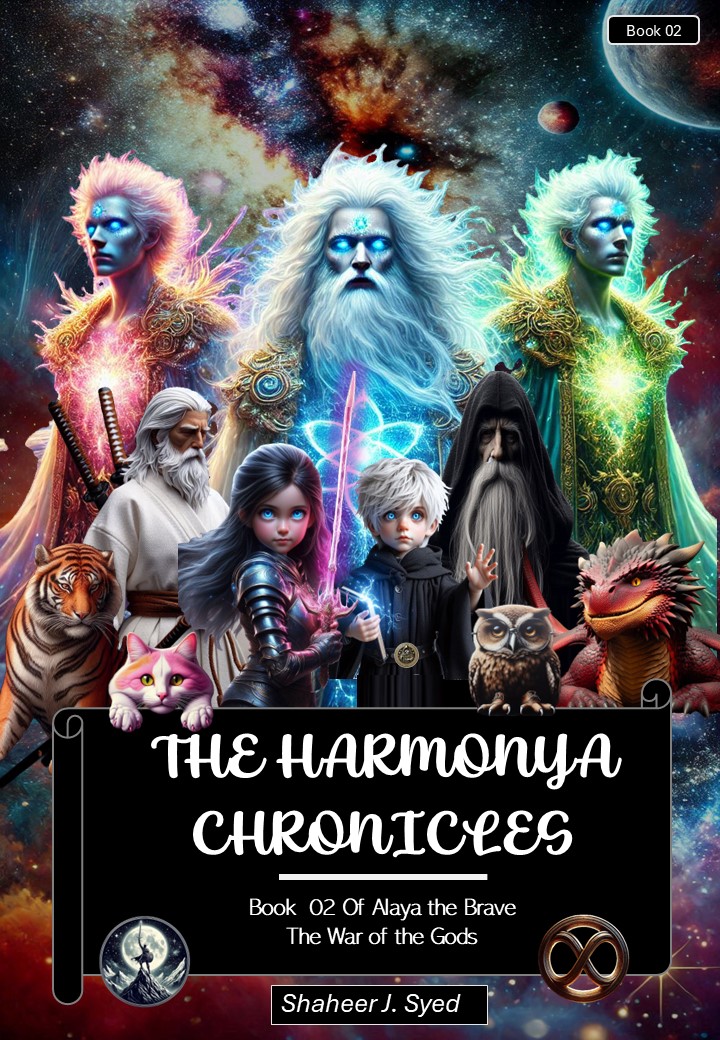
Continue your Journey with Book 02 of Alaya the Brave!


Why is Everyone Listening to "The Rise of The Storm Bringer"?


The Harmonya Chronicles Clubs!
Which warrior are you?
Join our warriors in their epic adventures today!
© 2023. All rights reserved.