
Book 13 Of The dragon Warriors - 3 Lens Review
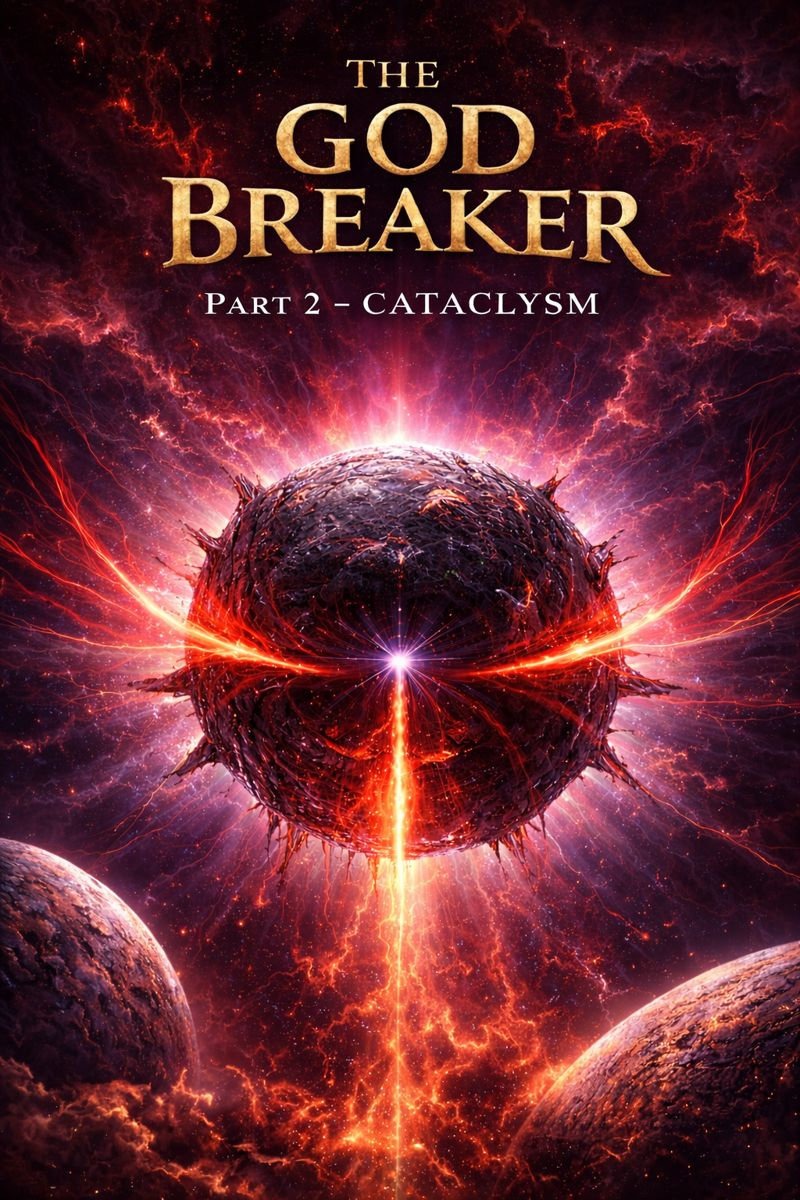
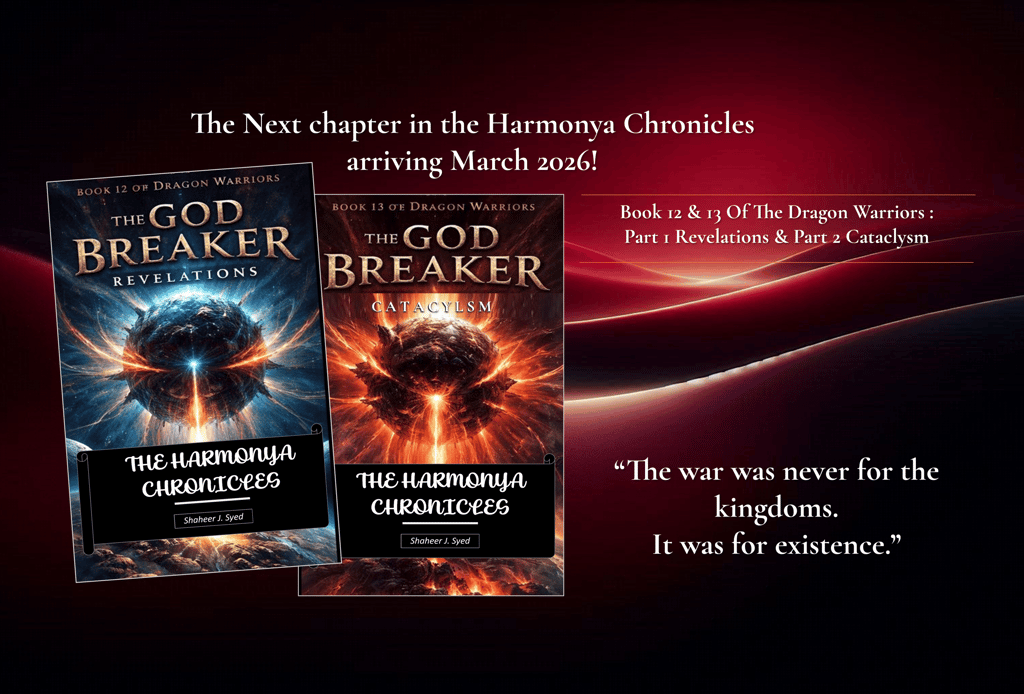
Dear readers! Welcome to the Book Review of The Harmonya Chronicles, Book 13 Of The Dragon Warriors, The God Breaker Part 2 - Cataclysm . A Three-Lens Publisher/Editor/Audience Analysis. The 13th review in the series of reviews!
The Harmonya Team
4/20/20266 min read
When the Sky Is Asked Whether It Must Remain
Note: This review follows Book 12 Of The Dragon Warriors — The God Breaker, Part 1: Revelations, where the full nature of the enemy's design was first disclosed. Books 12 and 13 are a single movement in two parts and must be read together.
For complete context: Book 01 | Book 02 | Book 03 | Book 04 | Book 05 | Book 06 | Book 07 | Book 08 | Book 09 | [Book 10] | Book 11 | Book 12
THE PUBLISHER'S LENS
Why Book 13 Is the Saga's Most Dangerous Confrontation
Book 13 – The God Breaker, Part 2: Cataclysm is the answer to Book 12's question.
Book 12 asked: what if the foundations of reality itself could be invited to stop agreeing? Book 13 delivers the moment when that invitation is finally, fully extended — not as suggestion, but as event. The pressure that has been accumulating since before the saga began arrives here, and the warriors must face it not with power they have been given, but with certainty they have chosen.
This is the saga's most consequential volume to date. Not because of what is destroyed — though the scale of what is threatened is total — but because of where the confrontation actually occurs. Book 13 does not fight its war on a battlefield. It fights it at the level beneath battlefields: at the level of identity, of conviction, of whether beings who have chosen to stand can be argued out of that choice by something that does not attack them, but simply asks, persistently and precisely, whether their reasons were ever real.
The enemy does not need to win by force. It needs only to make holding feel optional.
For studios and franchise development, Book 13 presents an unprecedented cinematic challenge: how to visualise an existential threat whose most terrifying attribute is that it asks rather than destroys. The book solves this through character interiority expressed via consequence — we understand the pressure through what it does to the world, and to those who refuse to let the world stop being itself.
THE EDITOR'S LENS
Narrative Architecture: Cataclysm as Argument, Not Event
Book 13 does something structurally bold. Its cataclysm is not a disaster in the conventional sense. There is no single moment of destruction that defines it. Instead, the catastrophe accumulates through sustained pressure on the agreements that make existence coherent.
Each chapter corresponds to a different domain of reality being pressed — gravity, time, biological continuity, conceptual stability, dimensional coherence. Each domain faces the same invitation: to stop insisting. The brilliance of this architecture is that each domain responds according to its nature, which means the book can show seven different versions of the same fundamental challenge without repetition.
The warriors are anchors. Not metaphorically — functionally. Their role is not to fight what is coming. It is to remain what they are in the presence of something designed specifically to make them question whether remaining themselves was ever a choice worth making.
This is a radical narrative structure. The protagonists are not acting — they are holding. And the entire emotional and philosophical weight of the book rests on whether holding, in this context, constitutes the most profound form of action available.
It does. The book earns that claim through accumulation rather than assertion.
The Seven at the Limit of Identity
Book 13's deepest character work occurs under conditions of maximum pressure. The warriors are not tested by what they face externally. They are tested by what they face in themselves when external certainty is removed.
Each warrior confronts, in their domain, a version of their deepest uncertainty: whether the conviction that has sustained them across books, across lifetimes in some cases, is genuine — or whether it was simply what they defaulted to in the absence of sufficient pressure to question it.
The book does not give easy answers. Some warriors hold immediately. Some hold with visible cost. Some discover that what they thought was certainty was something more fragile — and must find something below the certainty to stand on. What lies below certainty, the book suggests, is not hope, and not strength. It is simply the refusal to become someone who doesn't hold. That refusal is the only anchor that the weapon cannot dissolve.
The Alliance at Scale
Book 13 expands the saga's frame in another direction: outward, to the millions who stand alongside the Seven. The alliance that has been assembled across the preceding books is not decoration here. It is load-bearing architecture. The book makes clear that what the Seven anchor individually, the alliance sustains collectively — and that without both, neither is sufficient.
This is a statement about the nature of resistance that goes beyond fantasy: individual conviction and collective solidarity are not alternatives. They are mutually necessary. Each fails without the other.
THE AUDIENCE'S LENS
What Cataclysm Feels Like From Inside
Book 13 generates an unusual reader experience: the sensation of surviving something enormous without being certain what surviving it means.
The book does not end with the feeling of victory. It ends with the feeling of aftermath — the specific, disorienting quality of having come through something total and discovering that the other side does not announce itself as the other side. The ground is still present. The sky is still above. And somehow that ordinariness is the most significant thing the book can deliver.
Readers who have followed the saga will feel this as earned. The thirteen books of preparation were not preparation for spectacle. They were preparation for the moment when spectacle is not what is needed — and the warriors have become precisely what the moment requires, with no announcement and no fanfare.
The Reward for Long-Term Readers
If Book 12 is where the saga's retroactive coherence becomes visible, Book 13 is where it becomes felt. The warriors that readers have accompanied across their individual volumes — Alaya, Daniyal, Ashkaan, Safi, Elarian, Aurelia, Arcane — are present here as their complete selves. Not as types. As specific beings, shaped by every choice they have made, every cost they have paid, every book that earned them into who they now are.
Readers will not be able to engage with Book 13 without the weight of the preceding twelve. That is not a limitation. It is precisely the kind of experience that separates saga fiction from episodic storytelling — the compound interest of accumulated investment, paid out in full.
A Philosophical Core That Doesn't Flinch
Book 13 asks a question it does not fully resolve: Can certainty survive contact with an argument perfectly calibrated to dissolve it?
The book's answer is not triumphant. It is honest. Certainty, in the end, is not a state. It is a practice. It requires renewal. It is most true not when it is easiest to hold but when it is hardest — when the argument against it is at its most sophisticated, and when nothing except the decision to remain who you are stands between holding and collapse.
That is not a comfortable answer. It is the right one.
VERDICT FOR MEDIA & READERS: 9.9 / 10
Book 13 – The God Breaker, Part 2: Cataclysm is the saga's most emotionally and philosophically complete single volume to date.
It takes the revelations of Book 12 and subjects them to the ultimate test — not in theory, but in the lived experience of beings who have no guarantee that what they are choosing to hold is holdable. It earns its title without spectacle. The cataclysm is real. So is the holding.
This is the book that proves the saga's central argument: that the most fundamental form of resistance is not force. It is the refusal to become someone who doesn't resist.
Note: Book 13 is Part 2 of the God Breaker arc. It was released simultaneously with Book 12. Both must be read together.
Next in the saga: what the cataclysm revealed will be walked toward. What the holding earned will be carried to the place it was always building toward. Explore the saga: www.harmonyachronicles.com Listen to the music of Harmonya: https://www.youtube.com/@OBSIDIANHEART_SE
The enemy did not need to destroy the world. It only needed to ask whether the world still agreed to be itself. The answer came not from power, but from those who refused to let the question stand.
Read Other Blogs
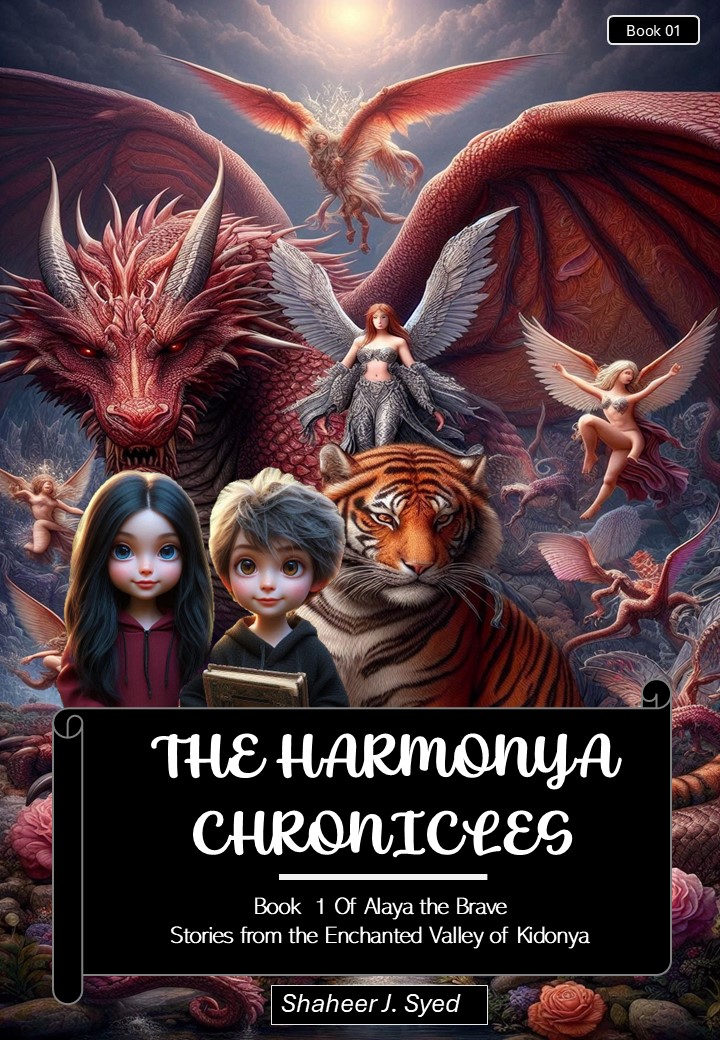
Start your Saga Journey with Book 01 of Alaya the Brave!
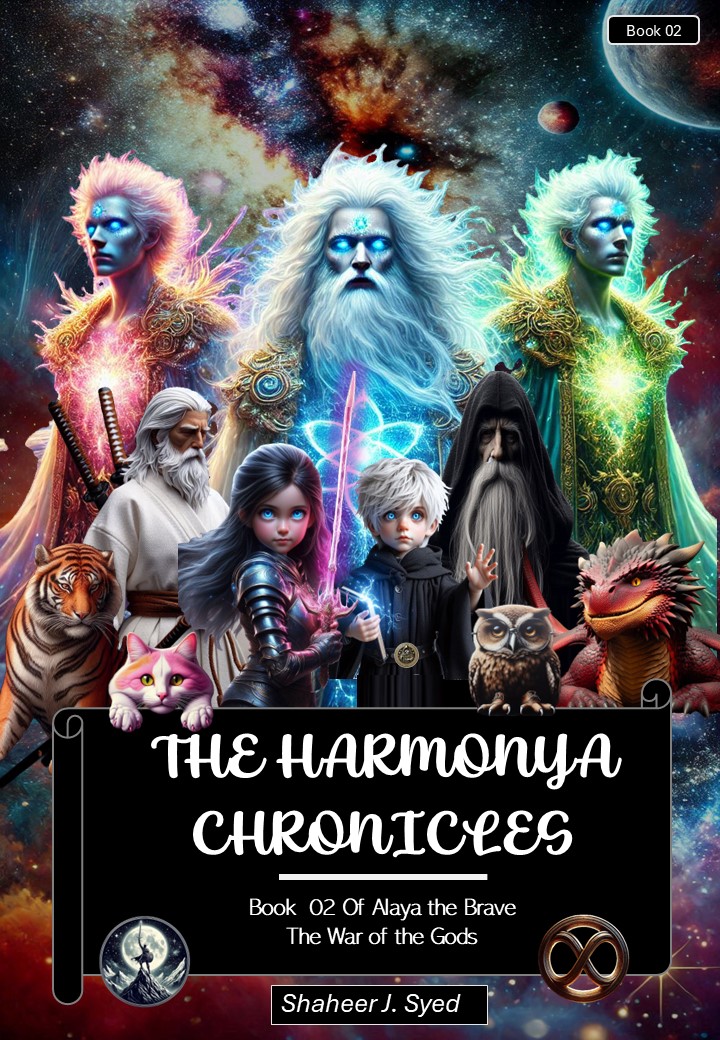
Continue your Journey with Book 02 of Alaya the Brave!
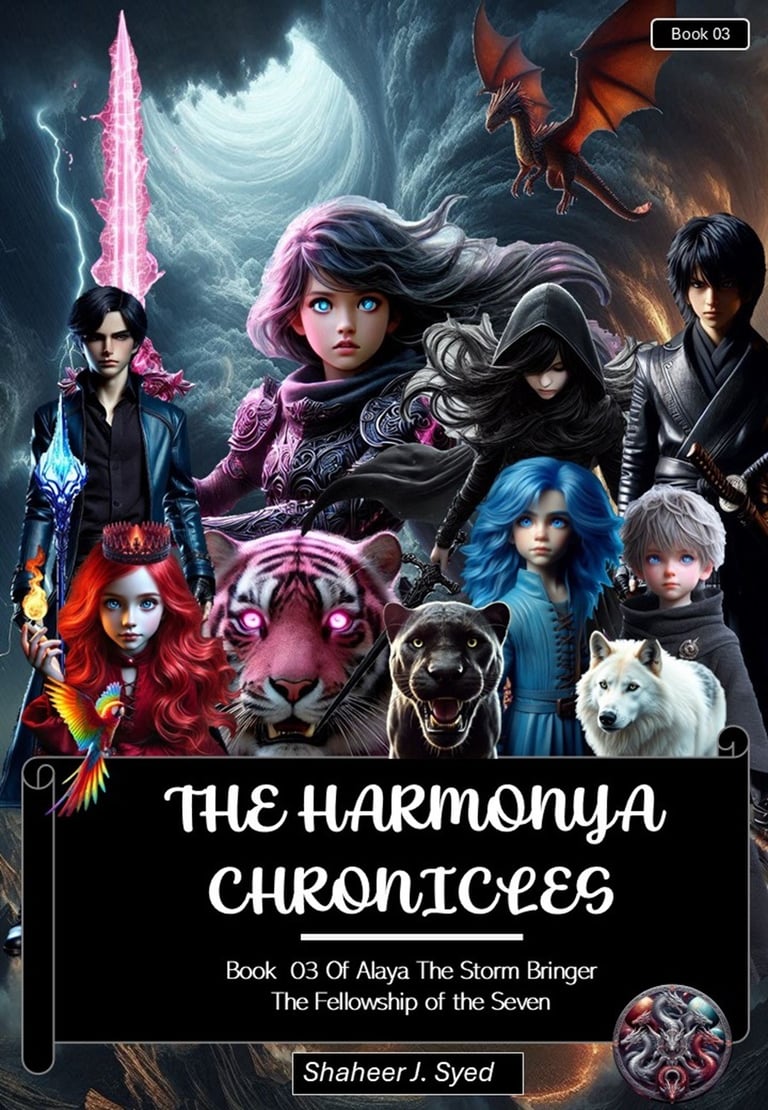
Read about Book 03 of Alaya The Storm Bringer!
The Harmonya Chronicles Clubs!
Which warrior are you?
Join our warriors in their epic adventures today!
© 2023. All rights reserved.