
Book 12 Of The dragon Warriors - 3 Lens Review
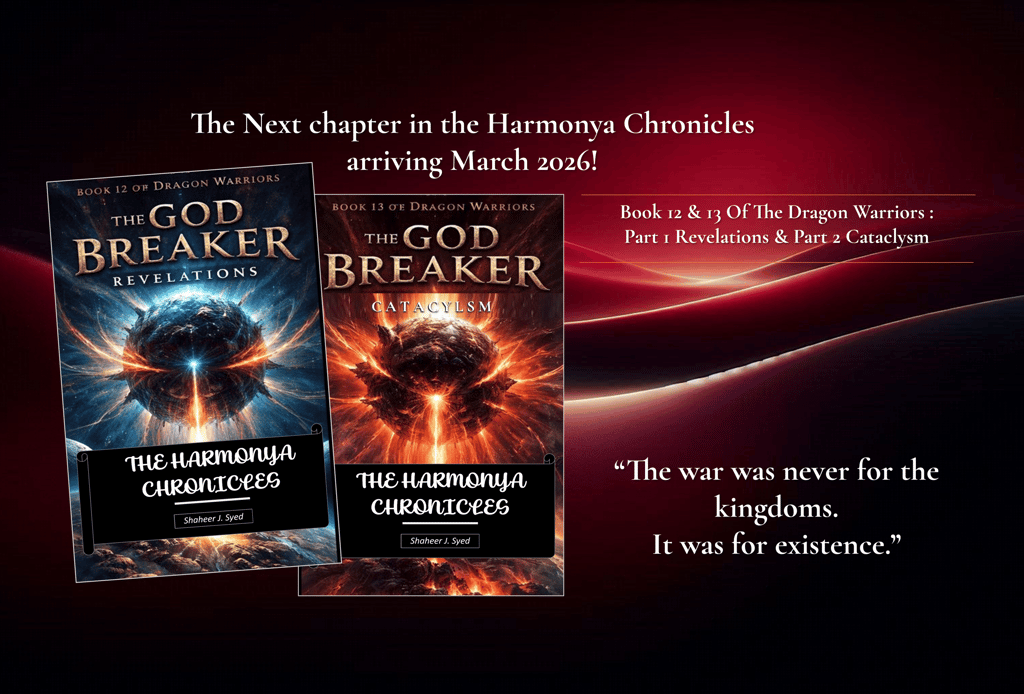
Dear readers! Welcome to the Book Review of The Harmonya Chronicles, Book 12 Of The Dragon Warriors, The God Breaker Part 1 - Revelations . A Three-Lens Publisher/Editor/Audience Analysis. The 12th review in the series of reviews!
The Harmonya Team
4/13/20265 min read
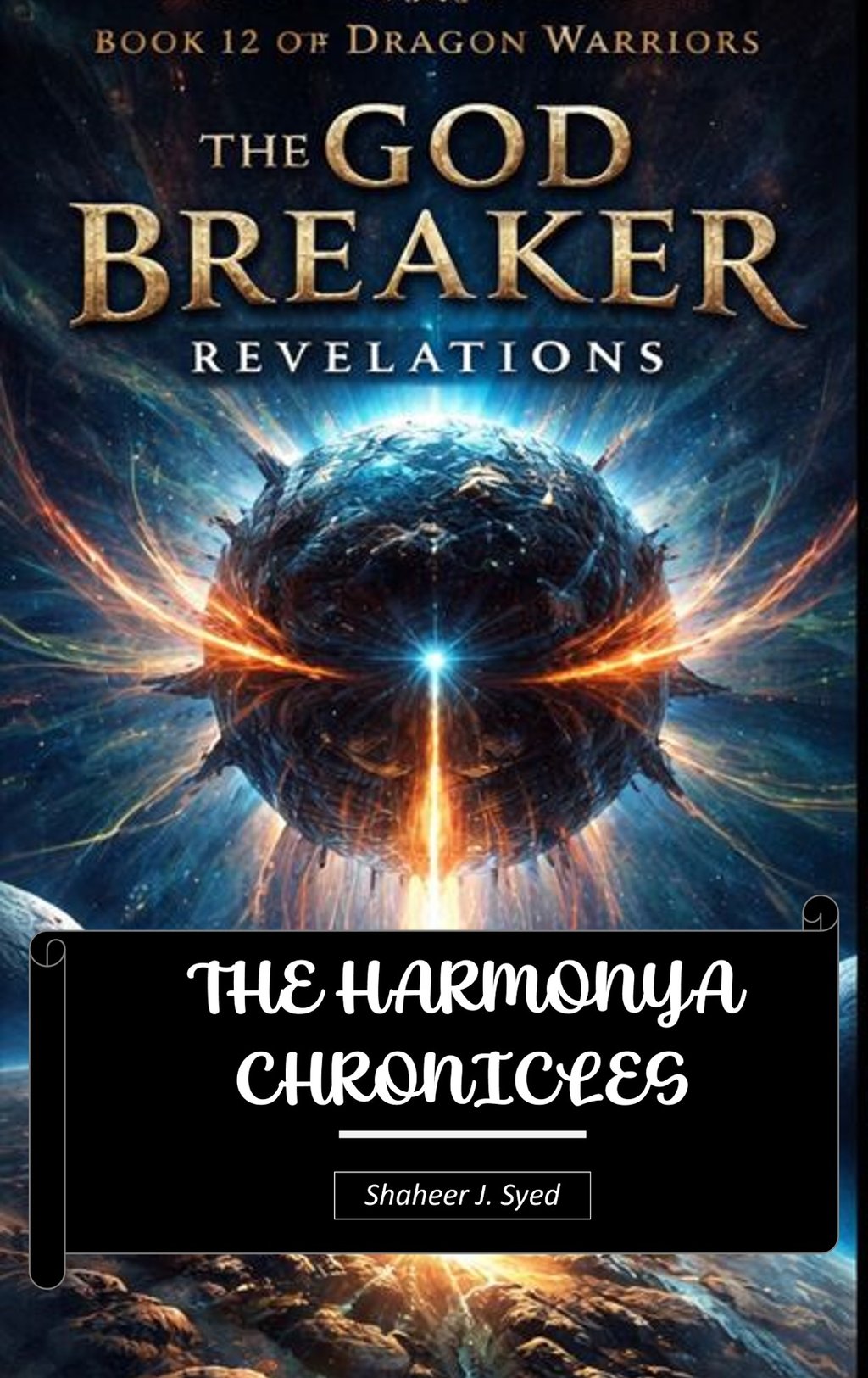
The Ground That Holds — and What It Costs to Hold It
Note: This review follows Book 11 Of Arcane The Shadow Blade, where the enemy's architecture of design was first fully exposed. For complete context: Book 01 | Book 02 | Book 03 | Book 04 | Book 05 | Book 06 | Book 07 | Book 08 | Book 09 | [Book 10] | Book 11
THE PUBLISHER'S LENS
Why Book 12 Is the Most Structurally Courageous Entry in the Saga
Book 12 – The God Breaker, Part 1: Revelations does not rush. That is its most deliberate and consequential creative decision.
After eleven books of escalating warfare, expanding alliances, and the surgical precision of Book 11's exposure of the Crimson Design, Book 12 stops. Not from exhaustion. By intent. This is a book that understands that some revelations cannot be absorbed while running — they require the reader, like the warriors, to stand still and receive what is arriving.
What arrives is not a new enemy. It is the full shape of the enemy that has existed since before the saga began. The nature of Malakar's true ambition is disclosed here — not through battle, but through understanding. The stakes do not escalate in scale so much as they clarify in precision. And precision, as this saga has always understood, is more dangerous than scale.
For franchise planning, Book 12 is essential connective architecture. It is the pivot between what the saga has been building and what the saga is now irrevocably becoming. Studios and adaptation teams will recognise it as the moment where the full diagram of the enemy's design is finally legible — and that legibility changes everything that follows.
This is not a book about what is being destroyed. It is a book about what destruction actually means — and why the warriors must understand that meaning before they can oppose it.
THE EDITOR'S LENS
Narrative Architecture: The Pause That Builds the Foundation
Book 12 is structured around revelation under pressure.
The saga has spent eleven books establishing what Harmonya is. What its kingdoms protect. What its warriors carry. Book 12 spends its pages revealing what all of that is actually up against — and why power, coordination, and courage, on their own, may not be sufficient to hold it.
The enemy's weapon is not a force. It is a question. A question put to the foundations of reality itself — to gravity, to time, to meaning, to the coherence that allows a world to remain a world. The architecture of the threat is geological: patient, accumulated, precise. It does not destroy. It invites structures to stop agreeing to exist.
This reframing is one of the saga's most sophisticated moves. The warriors are not simply outmatched in strength. They are confronted with a threat that operates at the level below where strength is decided. What the book asks is whether belief — chosen, deliberate, renewed without guarantee — can function as the structural equivalent of what the enemy seeks to dissolve.
Book 12 does not answer that question. It earns it as the right question to ask.
The Seven Across Seven Kingdoms
One of the book's architectural strengths is spatial. The seven warriors are not assembled in one place. They are deployed. Each to a corresponding site. Each holding something that the enemy is simultaneously, patiently pressing.
This structure allows the saga to show the breadth of what is being threatened without losing the intimacy of individual response. Each warrior faces the same pressure differently. The same question is asked of each of them — and each answers with what they are, not what they were trained to be.
This is deliberate design. The warriors are not interchangeable. They are specific. And the enemy knows exactly what it is pressing against in each case, which makes every moment of sustained holding feel earned rather than formulaic.
The Weight of Knowing Before Acting
Book 12's most unusual quality is its temporal weight. Much of what unfolds here is not action but comprehension — the specific psychological and philosophical burden of understanding something enormous before you are required to move against it.
The reader is asked to hold this too. To resist the pull toward resolution. To understand that some decisions must be informed before they can be made — and that the cost of insufficient understanding is not just tactical failure but something far more permanent.
THE AUDIENCE'S LENS
Tension Through Stillness
Book 12 generates a specific and rare kind of tension: the tension of ground that has not yet broken.
Nothing collapses. Nothing ends. The world does not fracture. And somehow that is more frightening than if it did — because the reader, like the warriors, can feel that the pressure is not easing. It is accumulating. Every page that passes without catastrophe is a page closer to the moment when holding is no longer sufficient.
This is masterful control of reader experience. The book weaponises the absence of explosion. It makes silence feel like a warning.
What Readers of Earlier Books Will Recognise
Readers who have followed the saga since Book 01 will experience something specific in Book 12: the sensation of the whole story becoming retroactively coherent. Events from as far back as the earliest books are quietly recontextualised here. Choices that seemed contingent are revealed as correspondent. The saga's patience is vindicated not through surprise but through depth.
This is the reward for readers who trusted the story's slow accumulation. The architecture beneath the architecture is finally visible.
A Philosophical Undercurrent That Refuses to Simplify
Book 12 carries a question through its pages that it never resolves cleanly: What if the act of holding is its own answer, independent of outcome?
Not as comfort. As challenge. The book does not assure the reader that holding will be rewarded. It asks whether holding matters regardless of whether it is rewarded — and it poses that question through action rather than argument. That restraint is what gives the book its philosophical weight without ever becoming a lecture.
VERDICT FOR MEDIA & READERS: 9.8 / 10
Book 12 – The God Breaker, Part 1: Revelations is the saga's most architecturally disciplined entry.
It exchanges spectacle for depth, speed for weight, and resolution for the far more difficult gift of complete understanding. It positions the final conflict not as an event that will happen, but as a question that must be answered — by the warriors, by the reader, and by whatever survives the asking.
This is not a book about the war beginning. It is the book where everyone finally understands what the war is.
Note: Book 12 is Part 1 of a two-part volume. Book 13 — The God Breaker, Part 2: Cataclysm — was released simultaneously. Both parts are required to complete this movement of the saga.
Next in the saga: the ground that held will finally be tested at the level where holding was never designed to be enough. Explore the saga: www.harmonyachronicles.com Listen to the music of Harmonya: https://www.youtube.com/@OBSIDIANHEART_SE
Some wars are decided before the first blow is struck. The blow arrives to confirm what the structure already answered.
Read Other Blogs
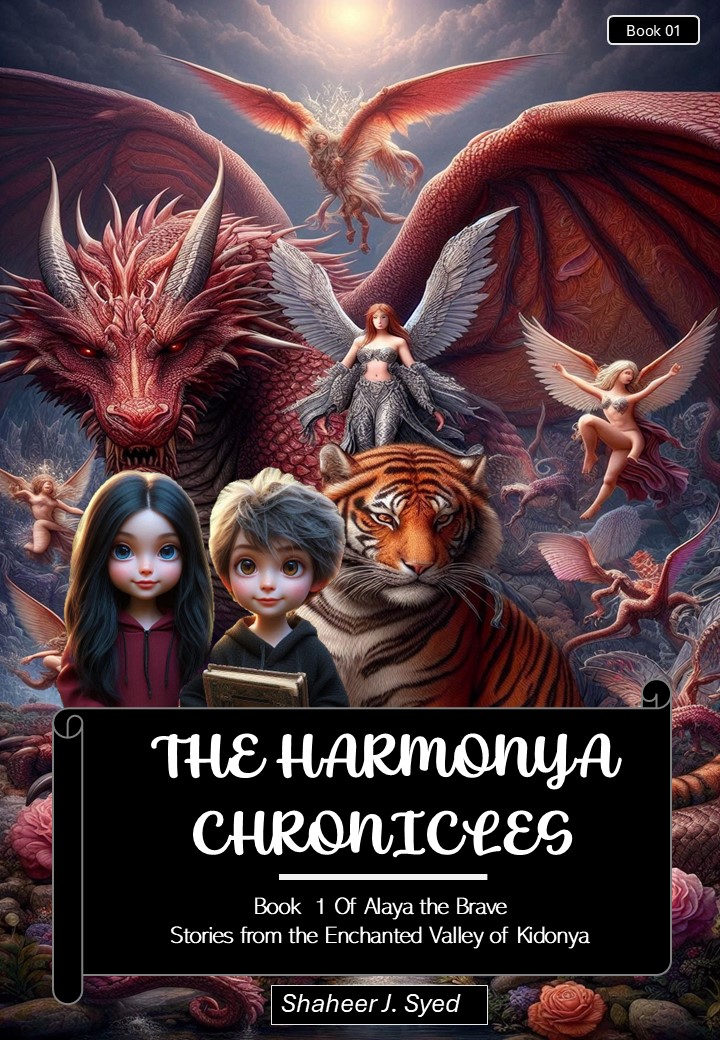
Start your Saga Journey with Book 01 of Alaya the Brave!
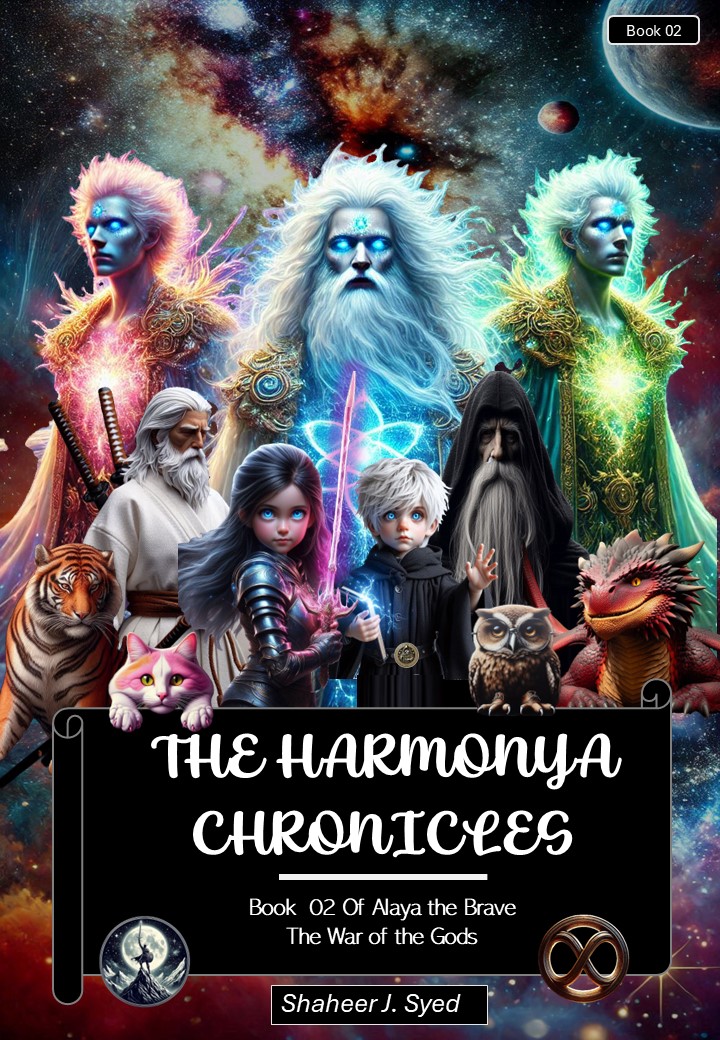
Continue your Journey with Book 02 of Alaya the Brave!
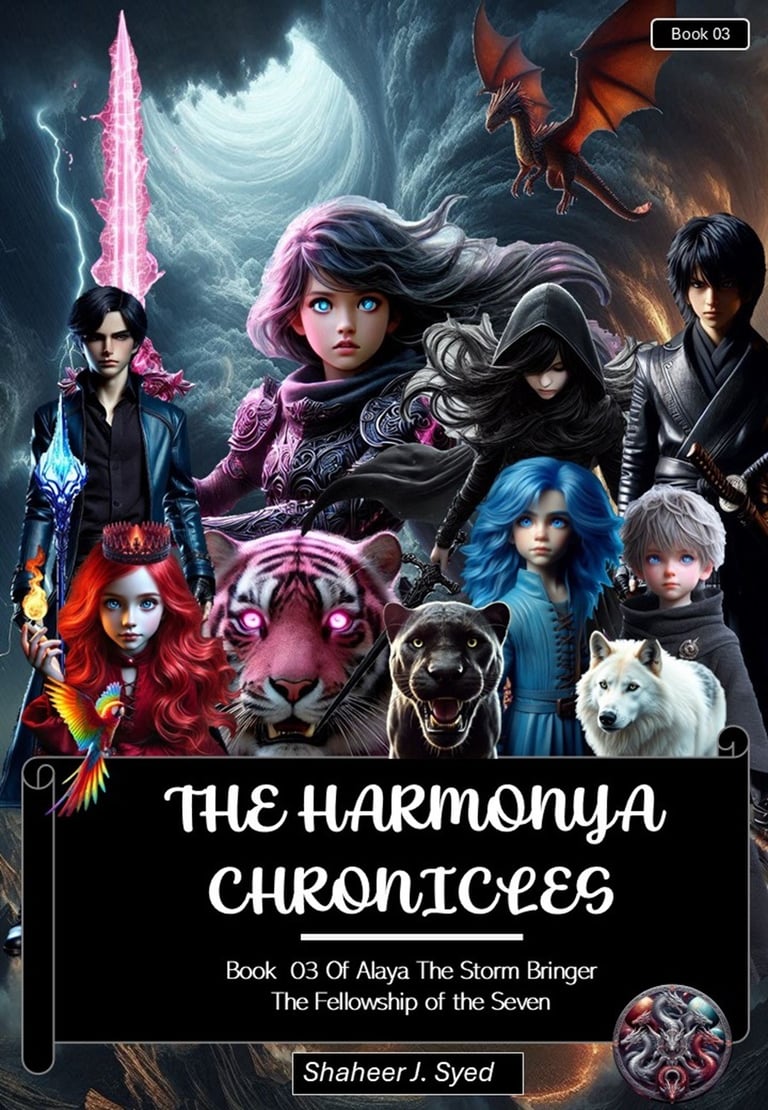
Read about Book 03 of Alaya The Storm Bringer!
The Harmonya Chronicles Clubs!
Which warrior are you?
Join our warriors in their epic adventures today!
© 2023. All rights reserved.